Episode 3 – July 21 2026
Full Transcript
[00:00:00]
I am Page Love, and I’m hosting the Healthy Habits webinar tonight with TY HealthSpan. I’m a registered dietician. I have a private practice, but I’m newly on board with TY HealthSpan as one of their professionals, and, uh, excited to share a healthy summertime travel nutrition message as we’re winding down our summer travel.
Um, I have a lot of clients I know who are getting those last-minute trips in or people who’ve been traveling, uh, all summer and still have one or two more things, uh, set up for the rest of the year. So, um, I’m gonna highlight both local and foreign travel tips for you all, um, on a number of nutrition parameters.
Hopefully, you’ll come away with a few goals that you can put into immediate practice. So I’m just gonna start off with some of the challenges of [00:01:00] travel. We often, when we’re traveling abroad in particular, will get thrown off of our normal schedule, so I’m gonna hit on, uh, a good bit around that. We may be traveling to warmer locations, although we’ve had lots of hot heat and m-humidity in Atlanta.
Um, you may be traveling to other places that are equally hot. It’s been hot all around the globe. You may experience jet lag. I’m gonna talk about how to combat that. You may have varying food availability. You’re obviously not in your own kitchen anymore, so you might not have all your handy snacks available nor your fresh food supply, so you’re relying on hotels and restaurants.
So I’m gonna hit on how to dine healthy when you’re traveling on the road like that. You may get exposed to new foods. You have to be a little bit careful about risk of food safety. I’m gonna talk about how to combat that. And then there’s always those temptations for overeating when we travel. I, I help a lot of people with weight management around their travel, so I’m gonna hit on how to combat [00:02:00] travel weight gain and stay on track with your, your menu plan and maintain your healthy body composition.
Just some of the beginning strategies of how to cope with the challenges of travel that I’ve already mentioned. Planning ahead is really key. I often do a whole planning session with my clients where we start to look at the hotel menus and the types of restaurants that they’re going to be going to, and if they even know the names of the restaurants.
Most restaurants have websites, and you can look at their menus. You can start to plan for those healthier choices. You may need to start planning snacks that you’d bring with you. Again, you don’t have your pantry available to you, so how are you going to keep your hunger under wraps and not get too hungry when you do go to restaurant meals?
That’s one of the biggest, uh, mistakes I think people make. They don’t travel with enough snacks. They ha- they’re off their regular time schedule. They get really hungry, and then they end up overeating or [00:03:00] making unhealthy food choices because they are so hungry. So I’m going to give you a whole list of just some portable snacks you might want to think about packing in your suitcase.
Um, you want to make sure that you’re, uh, hydrating well. I’m going to hit on how to really monitor that closely and, uh, be able to check whether or not you’re well-hydrated with some very easy, common checkpoints. And then again, we’re going to talk about food safety and, um, just also, uh, making sure that you have a safe water supply, particularly if you’re traveling out of the country.
We definitely don’t want to travel and then get sick and not be able to enjoy our, our trips. So starting off with jet lag, particularly if you are going to be, uh, traveling abroad over multiple, uh, uh, time zone changes, it’s really critical when you’re first getting on the plane to start with hydration.
Uh, staying well-hydrated really helps combat jet lag. Dehydrating makes symptoms of jet lag worse. We also wanna be cautious [00:04:00] again about food safety things. So when you’re arriving at a destination, eating raw fruit that you’re not sure whether or not it’s been washed or raw meats like sushi in a foreign country, just being a little cautious about that.
Also, dairy products if you’re not having it in the packaging where you’re opening up the seal. All of these types of things can lead to food safety issues, foodborne illness, which can cause dehydration, traveler’s diarrhea, so we wanna avoid that because that makes the symptoms of jet lag worse. And it’s also very important when you arrive at your location, even if it’s just going from Georgia to California, adapt to your time clock of the destination right away.
So if you’re going to Europe, you may have a longer day that first day, and that may mean you need a smaller fourth meal to get your body adapted to that time zone, and then that next morning really starting off with their breakfast time. That helps you minimize those days of [00:05:00] feeling tired and not wanting to eat on the destination time clock.
This is kind of a fun picture of a suitcase example of when I traveled to China, and I travel with the women’s and men’s professional tennis tours and help the players when they’re, um, in these different countries and so I often have to bring extra food for some of the players ’cause they forget to bring their snacks.
Your suitcase probably won’t have room for this many snacks, but you would wanna bring some portable things that would help support your snacking needs, also possibly even a backup food supply in a couple of key areas. For example, some safe protein sources if you’re not sure about the meat supply where you’re going.
Um, obviously if you’re going to five-star restaurants, that’s less of a concern, but not all of us will be doing that. So, uh, when you’re traveling to countries where you’re not sure if you’re going to like the meat, for example, you might wanna have a couple of backup examples that I’ll show you in just a moment.
We’ll start with snacks. For the plane, [00:06:00] think about bringing portable things that would be an addition to what we all know is very limited that the airlines provide us. So an energy bar, for example, individual trail mixes that have nuts and dried fruit in them, dried fruit by itself as it is, or fruit leathers as you see pictured at the top there.
I’m a big fan of the applesauce squeezes, particularly the ones that combine apple and other veggies. We often don’t get many veggies when we’re on a plane, and if you’re on a plane for eight to 10 hours, you might be very limited on fruits and vegetables. Loose granola or granola bars, meat jerkies, and jerkies come in all kinds of meat.
You can get turkey jerky, chicken jerky, salmon jerky, bison jerky. So picking a jerky of your choice. Vermont brand is one of my favorites. It has a turkey jerky that’s n- nitrate-free, so that might be one to consider. You may also want to consider on the plane having with you as well as at your destination electrolyte packs that would help you stay [00:07:00] hydrated.
As we’re traveling at higher altitudes, it’s very easy to become dehydrated. You have accelerated dehydration occurring at high altitude, so having electrolytes added to the, the water that they would provide you on the plane will help your body hold onto that water, help you stay better hydrated. Also, drinking salty, uh, beverages like tomato juice that often they will have as a beverage option at mealtime, and having salty foods.
All of those things help your body hold on to water and help you maintain your hydration status while you’re flying. Additionally, some of the planning would be bringing supplemental foods, as I mentioned a moment ago. Here are some examples of things to consider. Oatmeal packets, little individual peanut butter packets.
I love these little Bumble Bee chicken salad kits or tuna salad kits. They’re very portable. They don’t, um, s- uh, they’re not affected by heavy things in a suitcase. You can pack them in a suitcase and they’re not very heavy themselves. Also, a new product to keep [00:08:00] in mind are these little tuna kits from Wild Planet.
So this, this is, uh, wild caught tuna. It’s almost like a little mini meal. So let’s say you’re doing, um, in country travel, you’re not traveling that far, but you know you’re not gonna get served a meal. Maybe travel with one of these. This can, uh, go through TSA. It’s a ready to eat mini meal. Some airports will even have some of these things if you’ve forgotten, but it’s best to plan ahead and have a small part of your suitcase and carry on denoted for these types of things.
If you’re doing early morning travel, which many of us are, don’t forget your breakfast. Do try to get something in. Traveling, uh, on an empty stomach can increase risk of having, um, nausea when you’re flying, um, so you wanna have a little bit of bland food to settle your tummy. So a bagel on the run, m- maybe a bagel and peanut butter, making it a little bit more of a complete meal.
A yogurt smoothie, like the ones I pictured. Maybe a [00:09:00] combination of a bagel or an energy bar with a yogurt smoothie and some fruit. Getting a well-balanced meal with very quick, portable things. Packing your own peanut butter sandwich. For that matter, packing your own sandwich that you might also have on the plane for a lunch, uh, as well.
Breakfast wraps, like an egg wrap. All kinds of things that we might do at home that we could easily do quickly the morning of or make the night before so that we do get breakfast in our tummy, uh, that’s something we’re comfortable with, that settles our hunger. Our timing may be off on the day of travel with flight delays, so it’s good to get that first meal in versus not eating and depending on the, uh, airport food, which may not be as healthy for the breakfast.
I know in the Atlanta airport, we don’t have a whole lot of healthy options with the restaurant choices. So a few.. A little bit more detail on a few of the, the challenges you might have with travel. Again, the risk of dehydration, so additionally avoiding caffeinated beverages, limiting your alcohol. [00:10:00] Um, both caffeine and alcohol are diuretics, which means you’re gonna be losing most of the fluid that you consumed in those beverages shortly after having those beverages.
You’ll be peeing it out. It won’t stay in your body. So what we actually recommend to stay on track is drinking a hydrating beverage, one cup per hour. Water is ideal. A sport beverage is a good idea. And consuming the salty snacks as well, as I mentioned a moment ago. Um, additionally, think ahead as you’re even making your airline reservation, but you can do this up to about a week prior, you can inquire about any special meals that you may need.
Let’s say you have a high cholesterol level, ordering a low-fat meal. If you’re a vegetarian, ordering a vegetarian meal. You don’t have to go with what they automatically serve you, which may not be the healthiest meal. Most airline meals are not, um, set up for low fat. They tend to be quite caloric. Um, so keeping that in mind, if you are..
if you do have any medical [00:11:00] limitations and need a special meal, you can order that ahead. So again, the reminder, let’s drink one cup of hydrating fluid per hour. I, I often get a question, what about decaffeinated beverages, uh, decaffeinated sodas? Those do count as your water as well as, um, your carbonated waters.
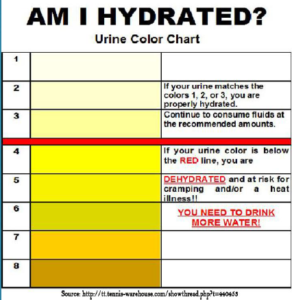
Those all count as water and will hydrate you well A very easy thing you can do at that first going to the bathroom in the, in the airplane is check your urine color. Check your urine color even at the airport before you’re leaving, and if your urine color is a light yellow, uh, really in the one and two range, that’s really what you want.
If it is a clear, and I often have people, um, comment that, “Oh, I thought clear urine was the color that I’m supposed to shoot for.” Clear urine means you’re actually drinking so much that you are urinating out more fluid than you should be, and you may actually be [00:12:00] letting go of electrolytes, flushing out sodium.
So it’s really important to pay attention to this. This is one of our best gauges to check our own hydration status. So do check that before and during your flight. If you get caught in a flight delay, these days, and I would say in our Atlanta airport, I- I’ve even noticed there are much healthier concessions in the magazine shops.
Look for snacks that are healthier, that are lower fat, pretzels, popcorn, 100% natural juices. Fresh fruit is even available, things like apples and bananas. Try to get healthy sandwiches. I, I often see Boar’s Head little stands with healthy sandwiches, little s- side salad type things, uh, chef salads, hummus snack kits, which might be hummus with crackers or hummus with veggies.
And then I’ve already mentioned individual nut packs for the whole trip, but those are also often available at the airport. So if you did forget to pack your snacks, it’ll be a little expensive, but you can get some healthy snacks at the [00:13:00] airport to get you through the flight, and then you could obviously shop when you first arrive at your destination to get other things that are healthy.
So again, don’t forget your breakfast, and as you’re arriving at your destination, um, often when you fly overnight, the breakfast that the airlines provide you is not so healthy. So I would say even getting another breakfast, which might be that extra meal that gets you on the timeline, ’cause let’s say you arrive in Europe at 6:00, but you’re noticing that you’re hungry around 9:00, getting another m- more balanced meal that maybe has a fibrous carbohydrate, like a whole grain bread, a fruit, a fresh fruit that you might not have had available on the plane, a good protein source like an egg or a lean breakfast meat, and getting that meal in, it’s gonna curb your hunger and help you head off at the pass to overeating later in the day.
And then just another couple of tips about food safety. We forget when we arrive in [00:14:00] foreign countries that the water supply and food supply might not be as safe as, as it is in the US. It’s a little bit less of a risk in the US to have to worry about this. But be careful about ice in foreign countries, and water that you haven’t opened the seal on the water bottle.
Um, so be careful about where you’re purchasing beverages, and if it’s at a restaurant, even asking for bottled water, and you being the one to open the bottled water. Be very careful about raw meats, I’ve already mentioned this, and dairy that you don’t see coming out of packaging. Um, and, you know, not being, uh, totally sure if it’s safe and, and pasteurized, for example.
Um, in Latin America, for example, it’s– you’re discouraged from consuming raw veggies and fruits because those may have had a, uh, unsafe water supply, uh, involved in growing them as well as washing them. So washing your own fruits and vegetables. Might even be worth packing a little, uh, vegetable [00:15:00] scrubber, as we’ve had our lettuce scare this week in the United States.
Um, what’s been advertised or educated on TV is the importance of peeling away the skin of or the outside of the head of lettuce, or I would say taking off the skin of a fruit or vegetable that you want to eat raw so that you’re taking away the part that might have been exposed to any potential foodborne illness Or parasite.
And then if you do end up catching something and having a bad upset tummy for the day, immediately start bland eating, and things like chewing on a raw banana can calm your tummy down. Um, going with, uh, making sure that you travel with probiotics or chewing a piece of ginger. Traveling with those little ginger chews is a good idea as well as traveling with probiotics if you’re not already doing that.
In fact, taking a probiotic about a week before you start gets your gut in a healthier place. And [00:16:00] another little trick I forgot to put on the slide is, um, actually having Pepto-Bismol with you and taking some Pepto-Bismol even as a protective step before you, uh, get exposed to something. It coats your esophagus and stomach wall.
If you were exposed to something in the early phase of travel, the first couple of days, the parasite won’t be able to get through that coating, so it gives you a little bit of extra, uh, protection. So trying to kind of have these little tools on hand that a doctor might suggest that you do. If you are sick and having traveler’s diarrhea, making sure that you’re staying hydrated, taking extra electrolytes.
Propel is an electrolyte water. We can get that easily in the US, but traveling with probably a higher electrolyte content, uh, source, something like a Liquid IV or a Pedialyte would be more along the lines of what you’re losing in your body fluids, uh, as far as the electrolyte content. So something that’s a little more concentrated.
And as [00:17:00] you are settling in at your location, whether it be local or abroad, trying to do healthy dining-out choices and healthy portion control. A lot of times, portion control is the main thing we need to work on. Um, a lot of us know about these healthy choices. We just need to whittle down those portion sizes.
So making sure you’re picking things that are made with low-fat cooking methods, you know, trying to stay away from the breaded and fried, trying to find fibrous-type grains, more veggie sides, side salads if it’s safe for you to have a salad in, in that country, drinking several cups of fluid at a meal to help you feel full.
Um, if you have a dessert, sharing it at the table, limiting those high-fat sauces that might be provided. You can always get the sauce on the side and use a little bit of it, um, and also to see if it’s something you’d even like, and then that way you can portion control the hidden fats. And then if you are left with having to do a fast food choice, [00:18:00] most fast food chains do offer the grilled chicken sandwiches, particularly if you’re in the United States, stop and by Chick-fil-A.
You could even get something like their kale crunch salad side or their fruit cup side. That would probably be the number one place I’d suggest stopping if you’re left with only fast food as your choice. But a sub sandwich on a whole grain bread and a lean luncheon meat, like a turkey or a ham, with maybe an oil and vinegar and veggie toppings, here in the US that’s a great option as well.
Salads that are well-balanced or, or bowl meal kinds of meals if you have to eat on the run are also excellent ideas. So salads with a bean and a lean meat is a very well-balanced meal where you’ve kinda got everything all in one and y- and it, it’s in healthy proportions. Even something like a Wendy’s baked potato and chili could be a healthy option if you’re in the US and left with fast food.
And then just a resource slide here. If you, um, are traveling abroad, you may wanna think about, uh, Jet Lag Genie or [00:19:00] Happycow.net. These are two good resources to help with dealing with jet lag and finding healthier restaurants abroad. Um, also OpenTable, that a lot of you are already familiar with, can also help you navigate food choices, menus, as well as finding out ahead of time, uh, about what a restaurant offers.
Um, and then Foodfacts.info gives you quite a bit of nutrition information, you know, all the macros that you might wanna know when you’re choosing from a fast food, uh, restaurant. It gives you all that stuff versus having to go to the fast food website for each restaurant. So these are some tools. I’m gonna allow some time now for questions, and if people have qu- if they leave and you have questions later, this is how to best reach me through my website.
And, uh, I often am doing travel sessions with people. That’s even something I can do for an individual, uh, session with a client, even if I’m not only working with them, uh, on other nutrition issues, that’s something [00:20:00] I’m glad to navigate. So I’m gonna see if I can pull up chat, and it looks like I’ve got one question Are there..
Okay, I think I answered this one from Fred. “Are there electrolyte brands or products that I recommend?” And yes, I do recommend for travel, um, both Liquid IV and Pedialyte, honestly, to have as a backup if you do, um, end up having traveler’s diarrhea and you’re losing a lot of fluids. Those will better replenish ’cause they’re more rich in sodium and potassium.
They’re more like our body fluids so that those would be better. Um, Propel has about 100 milligrams of sodium, whereas Liquid IV and Pedialyte are in the 500 plus range on sodium, which is the primary electrolyte that we’re losing in hot environments, but also having higher potassium. Um, another beverage you might wanna consider that’s really good for potassium, and that’s one of the electrolytes we lose in [00:21:00] diarrheal loss as well as vomiting loss if, if that was the kind of illness that you had during travel, and that’s coconut water, which is really soft and goes down well.
Um, it’s an excellent potassium source. It’s about 700 milligrams per serving, so that’s a great way to get in, uh, that electrolyte that we often lose with those kinds of illnesses. All right. Let me see if there’s any others. I am not seeing any other questions at the moment. Um, so I, um, have really enjoyed doing this brief Healthy Habits with you.
We packed a lot into our, uh, 20-minute window here and, um, have, have enjoyed this opportunity. I’ll be presenting again on how to combat heat illness next month as we face our hottest month of the year in Atlanta. And again, a lot of us are dealing with the heat in all parts of the [00:22:00] United States, so I will be talking more about hydration, uh, in that webinar as well as, um, just general methods for assessing hydration and managing dehydration and heat illness.
Thank you for your time today and please, uh, refer back to TY Healthspan for any questions that you have about our upcoming Healthy Habits seminars. Thank you. Thank you. Thank you, Paige