
What is Your Living Space Asking of You?
Healthy Habits Weekly Briefing
Episode 11 - September 15, 2026
Featured Presenter: Coach Shannon Lubell
MBA, ACC, ICF-certified coach, Wayfinder life coach
Your living space is part of the story your brain is living in. In this Healthy Habits replay, coach Shannon Lubell shows how the things around us can either support our energy and attention or quietly become unfinished business.
Through a guided “body compass” exercise and practical coaching prompts, Shannon helps viewers notice which areas of their home or workspace feel restorative, which feel draining, and what one small change might help. She offers a more useful question than “Is my space perfect?”: “Is my living space supporting me, or am I supporting my living space?”
This is not a demand to become a minimalist. It is an invitation to keep what genuinely matters, release what no longer fits, and build the letting-go muscle in manageable steps. Start with a drawer, a shelf, five items, or even opening the curtains. The goal is to make room for the life you want to live.
Click below to watch previous episodes
or register for an upcoming live briefing.
Episode Summary
The premise: Shannon framed the home or workplace as an active influence on mental well-being. Our surroundings continually provide information to the brain and body, affecting attention, relaxation, stress, and sense of control.
Not minimalism, intentionality: The session avoided a one-size-fits-all prescription. The goal is not less for the sake of less; it is to keep what genuinely matters and create spaces that support the life a person is living now.
The body compass: A guided mental walk-through invited viewers to compare a favorite space with one they avoid, notice their physical response, and identify one small change that could make the less-supportive area more inviting.
Why clutter has weight: Objects require cleaning, storage, maintenance, decisions, and attention. Some also carry memories, guilt, expectations, or older identities. Shannon described these connections as strings that can either feel light and energizing or heavy and draining.
A usable decision framework: Her questions were direct: Do I use it? Does it support my life now? How do I feel when I see it? Would I buy it again? Can I replace it in two days for under $20? Am I keeping it because I want it or because I feel guilty?
Build the muscle: Shannon compared decluttering to strength training. Start smaller than expected: five items, one drawer, one shelf, or one pile of papers. A visible difference creates motivation, and each decision makes the next one easier.
Practical takeaway: Choose one small space this week. Make one change that reduces friction or adds support, then notice what shifts in your attention, energy, or ability to rest.
What You’ll Learn
- How your home or workspace can influence stress, attention, rest, and sense of control
- A simple body-compass exercise for noticing how different spaces affect you
- Why clutter can become unfinished mental business, not just a housekeeping issue
- Five useful questions to help decide what still belongs in your life
- How to use small “turtle steps” to build momentum without attempting a total overhaul
“Snacks” from this Episode
We’ve summarized the key points of this episode for you below.
Is your living space affecting you more than you realize?
Coach Shannon Lubell’s premise is simple: your home or workspace is constantly giving your brain information. It can influence stress, attention, relaxation, and your sense of control.
Where should you start when evaluating your space?
Start at the front door. Notice what you see before you enter and how it makes you feel. Your entryway is the first message your living space gives you each day.
What is the “body compass” exercise?
Take a mental walk through your home or workspace. Notice the area you enjoy most, the area you avoid, and how each affects your body, mood, and energy.
Can one small change really make a difference?
Yes. During the session, Tom opened curtains in his office and immediately felt better. It took seconds, cost nothing, and changed how the room supported him.
Is clutter only a housekeeping problem?
No. Every object may require cleaning, storage, maintenance, decisions, and attention. Shannon’s point: stuff takes up mental space as well as physical space.
What does Shannon mean by “light” and “heavy” strings?
She imagines a string connecting us to every possession. Some items bring joy and energy. Others feel heavy, draining, or like unfinished business tugging at us.
Should you get rid of everything that does not feel useful?
No. A keepsake, photo, or child’s drawing can be worth keeping when it brings real joy. Intentional living is about choosing what supports you, not stripping life bare.
Does a messy space mean you have failed?
Absolutely not. Shannon suggests a better question: Is your living space supporting you, or are you constantly supporting and managing your living space?
Is this really about minimalism?
Not necessarily. Minimalism can work well for some people and not for others. The real goal is intentionality: keeping what works for your life and releasing what does not.
What is the first question to ask about an item?
Ask: “Do I use it?” For clothes and seasonal items, Shannon also suggests asking whether you have used it in the past three months or realistically will soon.
Does this item support the life you are living now?
Some things belong to an earlier version of you. That does not make them bad. It simply means they may no longer deserve space in your current life.
Would you buy it again?
It is a useful decision prompt. If you would not spend money on an item again today, it may be worth asking why you are still giving it space and attention.
What is Shannon’s 20/20 rule?
If you could replace an item within two days for under $20, it may not need permanent real estate in your home. One occasional repurchase can be worth the relief.
Are you keeping it because you want it or because you feel guilty?
Guilt can quietly become a storage plan. Before keeping something, ask whether it genuinely serves you or simply represents obligation, expectation, or a difficult memory.
How do you start without becoming overwhelmed?
Start smaller than you think. Five items. One drawer. One shelf. One pile of papers. A small visible change can create momentum for the next decision.
What are “turtle steps”?
Shannon uses Martha Beck’s idea of turtle steps: break a large task into the smallest possible next action. You do not need to tackle the garage this weekend.
Do you need to schedule a full decluttering day?
Not at all. Shannon recommends building small decisions into ordinary life. While cooking, sort a utensil drawer. While getting dressed, reconsider one item of clothing.
What is a packing party?
When you are unsure about an item, pack it away, date the box, and revisit it later. If you have not opened it in a year, you have useful information.
What are you really making room for?
The payoff is bigger than a tidy room. Shannon encourages people to make room for attention, energy, creativity, relationships, rest, and what matters most.
What is one Healthy Habits action to take today?
Choose the part of your space that feels least supportive. Make one small change today, then notice what shifts in your mood, focus, energy, or ability to relax.
About Healthy Habits Weekly Briefing
Healthy Habits Weekly Briefing is TY HealthSpan’s free weekly series featuring practical, evidence-based guidance to help you live longer and live better.
Each session explores topics like nutrition, exercise, metabolic health, recovery, and healthy aging, with actionable advice you can use right away. Browse the videos, transcripts, and Healthy Habits Snacks to learn at your own pace.
Join us every Tuesday live at 7pm ET, or explore previous episodes any time. Registration is free and provides access to all live Healthy Habits Weekly Briefings with a single link. Episodes last about 30 minutes.
About TY (Transform Your) HealthSpan
TY HealthSpan delivers true precision health: gold-standard diagnostics, science-based insights, and clear, personalized plans designed to help you live longer and feel better.
We don’t rely on estimates. We measure what matters, help you understand what the numbers mean, and show you what to do next.
Ready to Take Your First Step Toward Wellness and Longevity?
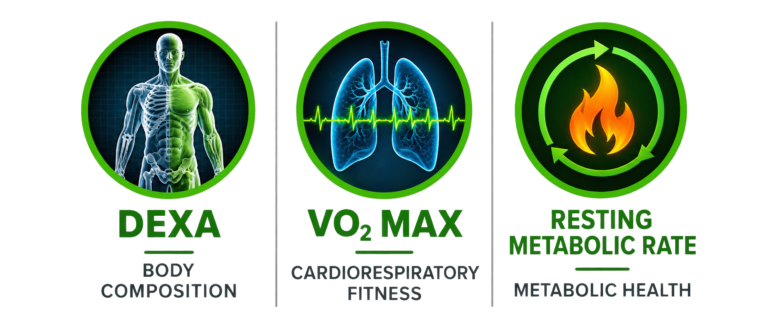
Our Comprehensive Diagnostic combines three gold-standard assessments to establish an objective baseline of your health – only $295 (compare at $325 or more)
Purchase your Comprehensive Diagnostic and you’ll receive 50% off our $700 Healthspan Journey Plan, where we turn your results, goals and priorities into a personalized six-month plan.
Schedule Your Comprehensive Diagnostic →
Live longer. Live better.
Full Episode Transcript
[00:00]
TY HealthSpan
Welcome to Shannon Lubell. Good evening.
Coach Shannon Lubell
Hey, Tom!
TY HealthSpan
How are you?
Coach Shannon Lubell
I am well, thank you.
TY HealthSpan
All right, well, I’m gonna cut you loose, and have fun tonight, and we’ll be, I’ll be sitting here listening, and… and
Fielding questions in the chat if anybody has them.
Coach Shannon Lubell
You sure about that, Tom? You’re gonna cut me loose for real?
TY HealthSpan
Yes.
Coach Shannon Lubell
Thank you. Well, welcome, everyone, whether you’re joining us live or you’re catching the recording later. I’m Shannon Lubelle, and I’m an ICF-certified Coach, a certified Wayfinder life coach, trained by Martha Beck.
And a positive intelligence coach. I work with leaders, nonprofit professionals, and people navigating change.
My background is a little eclectic, in addition to working in the corporate world after business school. I’ve coached rowing at Vanderbilt and Emory, I’ve taught yoga, I’ve worked as a personal trainer, and I’m endlessly curious about everything.
[00:01]
From feng shui to photography and cooking, recently learning French, and I’m really interested in German history.
I’ve been practicing intentional living since 2007, when I hired my own career coach.
It changed the way I thought about my life and my work, and eventually became a passion I now get to share with others.
Tonight, I’m excited to talk about one part of that, how being intentional about our living spaces can support our mental well-being and make room for the lives we want to live.
Okay, it’s being recorded. Let me see if I can…
Advance my slides… there we go. Great! What if I told you your living space, which I define as it could be your workplace, it could be your home, or, like me, my workplace is in my home, it could be both.
[00:02]
So, that’s… you can define what living space means to you, but what if I said your living space is taking up more mental space than you realize?
And I want to start with an exercise to help you apply this idea to your own personal situation.
So I’d invite you, if you feel comfortable, to close your eyes.
To find a comfortable seat, maybe putting your feet flat on the floor. Take a few deep breaths.
I’d like to invite you to take a mental tour Of your living space.
So we’re going to mentally walk through your living space, starting at your front door. And before you even walk through the front door, I want you to look at your front door, and just notice
[00:03]
the surroundings, and how that feels to you. This is your entry point to your living space, and this can communicate a lot to others, a lot to yourself.
So, through feng shui, there’s a lot of practices I won’t get into tonight that can help you create a welcoming, entryway, but I want you to just notice your living space’s entry space.
And I invite you to open the door, and to walk into that living space, and just stand there for a moment, because I want you to notice
How it feels when you first walk into that living space.
And often, I might think about, oh, what would a distant relative or a friend I haven’t seen in a long time think when they walk in my living space? Or perhaps you’ve been traveling for a few weeks or a month, and you return.
[00:04]
And you often have a new perspective of what your living space looks like. You notice things that you might not on the day-to-day. This is what I want you to walk through your living space noticing. I want you to be very aware of
What area you particularly like and why.
And I want you to notice an area that you particularly may not like, and why. So, I’ll give you maybe up to a minute to just take a mental walk through your living space, through every room, every closet and bathroom.
I’ll set the clock for about a minute and let you just kind of take that mental walkthrough, and again, noticing how the different areas make you feel, especially those that you particularly like, or those that you don’t. So…
I’ll let you begin.
[00:05]
Now, it’s a brief tour, but I’ll give you just a few more moments to wrap up your last few areas.
[00:06]
Well, hopefully now, and again, I actually ask you to keep your eyes closed, as we go through this.
visualization, but I hope by now you’ve been able to take at least a brief walkthrough, all the areas of your living space.
And I want you to return to the space that you especially like.
And visually, Imagine yourself there.
And I want you to think about why you like this. Why is this particular spot more appealing than the others?
And you, as you visualize yourself in this space, notice how you’re feeling when you’re in this space.
[00:07]
Perhaps even noticing where in your body you’re feeling these sensations.
And now, let’s visit that place that could be better.
The place that maybe you least enjoy spending time in.
And ask yourself, why?
And how do you feel?
When you’re in this space.
Again, noticing any body sensations, particular places in your body, and how it feels.
[00:08]
And imagine the difference between your favorite spot and this spot.
And why that is. And I challenge you to think about how… or decide one small change that you could make.
in this least favorite spot that could make it become more inviting to you. Just one small thing that might help.
And when you’re done, I invite you to open your eyes.
And if you want to jot anything down, if you have a piece of paper, or your phone, and you had any ideas that came to mind.
Feel free to write those down.
And even after today, you can replay this video.
[00:09]
And pause it, and maybe take a little more time walking through your living space. Maybe allowing yourself a good 5 or 10 minutes to really dig into each spot. We use our body compass, that’s what I was… a tool I was… I was offering to you, to really, notice how we feel in certain areas.
And your living space is part of the story your brain is living in. So, it really affects how you feel, and I hope you felt that. And Tom, maybe you’re there and you can chime in and share something about that experience, if you’d like.
And maybe not. If there’s anybody on the chat, feel free to chime in at any time.
TY HealthSpan
Yeah, sorry, sorry, I was actually, I was actually making the change.
Coach Shannon Lubell
Where are you really? Yeah, I love manufacturing, that’s our job.
[00:10]
TY HealthSpan
I was, I was re… I was realizing that here, here in my office, I, I always keep my, my, my,
my curtains closed, and I’ve got these beautiful windows, and I never let the maximum amount of light in, and I’m like, okay, well, that’s pretty dumb.
So… I just opened up my, opened up my curtains.
Coach Shannon Lubell
Brilliant. And how… I mean, was that a… like, what a change that can make, right?
TY HealthSpan
Oh, yeah, I’m already liking it.
Coach Shannon Lubell
Great. Well, I love that idea, and again, intentional living is about taking small moments and maximizing your living space. And I love you didn’t have to spend any money to do that. It wasn’t a heavy lift.
And you saw this big return on this small change. So, I love that example, and I’m so excited that you were able to make it so quickly. Well done.
[00:11]
So your living space is not neutral. Our surroundings can influence our sense of control, our ability to relax, our stress level, and our attention. So our living space is constantly giving our brain information, and our body, as you saw in that exercise.
So stuff isn’t passive. Every object can require space, cleaning, organizing, maintenance, decision-making, attention. Stuff takes up physical space, as well as mental space.
And I… I like this visualization of imagining, you know, you could say every appointment in your calendar, you could say everybody you know.
you can apply this tool to your stuff, and I’m gonna apply it to stuff right now. But every… everything that we have, I like to visualize a little string or a cord connecting me to everything, almost like a web.
coming out in every direction to everything that I own. And some of these strings may be long, some may be short, some may be thick, some may be thin. You know, things that, you know, are kind of a drag or a chore, things I don’t enjoy, might be a thick, jagged, black string that I feel really like it’s tugging on me, and it doesn’t have that good feeling.
[00:12]
Or some things that I love, I may look at it and say, oh my gosh, it’s almost like a ray of sunshine string is coming to connect me to that thing. And the idea is that things can either give us energy, or they can take it away. And that’s why being intentional about our things. You know, Tom’s
Tom’s window was probably, like, the string, if you were to describe how that string might have morphed when you opened the curtains. Maybe it was a lighter pull on you after you did that.
Sometimes… Beautiful. Yeah, yeah, do you feel that?
TY HealthSpan
Absolutely.
[00:13]
Coach Shannon Lubell
Yeah, so it’s… yeah, I like a light… I don’t like to be tied to a lot of things, right, with these heavy strings. I like to keep it loose and flowing with ease.
But sometimes with our stuff, we’re also keeping a story, right? So, it’s not just about the thing. You know, I’m looking on my desk, I have this little picture that my… one of my kiddos made many years ago.
And I keep it there. It is a memory. You know, it is a memory of when they were little. It was an identity, me as a mom, expectations, there’s guilt, there’s obligations, there’s older versions of ourselves, right? I kind of miss parenting little boys. I have…
two teen boys now, and this reminds me of how sweet and special that time is. Now, if looking at this made me think, oh, more clutter, I probably would have gotten rid of it, like most of the artwork they’ve done over the years, but I decided to keep this because it’s…
It’s actually something that is a light string. It really, it really brings me joy. So I think you’re starting to understand that there’s a lot of energy that our things either give us or take us.
[00:14]
So, you know, sometimes decluttering is about renegotiating our relationship with the past, and I’ll get into that a little more soon.
So, clutter can become unfinished business, which can feel stressful, shameful, and unsettling. You may think, gosh, I need to organize that, or I should donate those, or when was the last time I cleaned out my refrigerator, or my garage, or my closet? So, I’ve worked with clients through this idea of living space.
For years, and some of the common clutter, which may resonate, include expired food and medicine, sports equipment that we no longer use, hobby supplies that remain untouched.
Clothes that don’t fit or flatter, excess linens and pillows, unnecessary paperwork, toys and games, makeup and personal care products.
So, having a mess doesn’t equal failure. The better question I like to use is, is your living space supporting you, or are you supporting your living space, right?
[00:15]
Am I always cleaning it? Am I always storing and managing things? Or are they giving me the life that I… are they supporting me in my life’s goals and what I… what I want my life to be today? So these are some of the questions I like to ask.
A little bit of research, just highlighting that consistent positive relationship between voluntary simplicity and well-being, that greater home clutter was associated with lower mental well-being.
This is interesting. Minimalism was associated with more positive effect and less negative effect, but not greater life satisfaction.
So, to me, I boiled it down to there’s a relationship between intentionality, possessions, clutter, and well-being.
But this isn’t a prescription for the perfect home. And let me talk a little bit about minimalism. So it’s not really about minimalism, which, you know, it’s become a big thing. We have Marie Kondo, we have The Minimalists, we have, you know, all the documentaries and books and…
[00:16]
TikToks and social media about, you know, creating this perfect space, it’s not really about that. I… I…
suffer from overwhelm and anxiety if I have a lot of stuff. So this is, you know, to me, this supports my… my well-being, having my office being very, minimalistic.
But you don’t need it. You don’t have to have that. Minimalism is one approach, and you may have minimalism in one room of your house, I do in my office, where maybe the family room can be a little more…
not minimalistic. So, it’s all about intentionality, and what
Each room and what your living space
how it can support you. So, remove what isn’t serving you, that gives you less.
Having order makes your daily life easier, and if you keep what genuinely matters, you have more meaning in your life. So you don’t need less for the sake of less. Just… just have what works for you.
[00:17]
And everybody’s different.
I have another quick exercise. I do love exercises, as Tom knows, but I like this one, how to create the living space that supports your mental health. And actually, Tom, you’ve already beat me to this. You’ve already completed this exercise before, so you’re ahead of the curve. But, you know, I always like to ask, does this still serve me? Again, am I serving my living space, or is that supporting and serving me?
So, I look at something and I say, do I use it? You know, do I use it?
sometimes I’ll ask, will I use it in the next 3 months? Have I used it in the past 3 months? That’s often with clothes, because of the seasons. Does it support the life I’m living now? Who I am now, at this age, in 2020… September of 2026?
Who am I now in this moment?
[00:18]
how do I feel looking at that? We did the body compass exercise before. I’m all about feeling,
our bodies give us so much energy that our brains like to block out. We think we’re so cerebral, left-brained, but if we can tap into our body, it’s almost like you think of animals and how wise they are. If we can just let go of that thinking mind a little bit and tap into our senses, we can get a lot of information.
If given the chance, would I buy it again, right? Would I spend the money on it again?
Now one tip, when I’m cleaning, I’ll often say, can I get it in 2 days?
for under $20, or would it take me 20 minutes or less to get it? If the answer is yes, I often get rid of it, because, well, I can spend $20 on something, and if it means I get rid of 100 things and I regret one, it’s worth the $20 to get rid of all that other stuff.
And then, am I keeping it because I want it, or because I feel guilty about it? And we talked about some of the stories behind our things.
[00:19]
This is a bonus hack I love. Gretchen Rubin, who wrote The Happiness Project, shared this one. I’m paraphrasing, but would I want to run into an ex while wearing this? This is when I help people work on their closets, or they’re doing a living space challenge with me, and they’re tackling their closet. I’ll say, think about it, if you ran into an ex, would you be wearing that? And I’ve actually gotten rid of a lot of things
With that prompt.
So…
This is all about building your letting go muscle. So this is, you know, at TY HealthSpan, it’s all about health, and some of the things is strength and conditioning, right?
You want small changes to create bigger changes. So this is a lot like, you know, if you were weightlifting, decluttering is a skill. They get… skills get stronger with practice. A visible difference can create motivation, motivation can create momentum, and every decision makes the next decision a little easier. So it’s not about tackling a garage in an afternoon. You can, if that’s what you want.
[00:20]
But why don’t you just start small? So you don’t have to be good at letting go before you begin. So, here it is. Start small. Smaller than you think. And again, this is applicable to making any change, and this is what Martha Beck calls turtle steps. It’s really about taking a task
And breaking it down into a really small step. And often, we write a step, I want to run 5,000… 5…
Okay, I want to do a 5K, and it’s like, oh my gosh, I don’t even have good sneakers that support me. Well, I need to get sneakers, that’s my first step. And I’ll say, wait, wait, wait, wait, wait. Where are you going to get the sneakers, or what sneakers are you going to get? Oh, wow, I have to research, you know, I’ll go on Wirecutter and look at the latest
sneaker fads for my type of running, or whatever sport I do. So it’s really about breaking down the step into something that’s much smaller. So, with clutter clearing or living space.
[00:21]
you know, 5 things, a drawer, a shelf, a pile of papers, you know, start small, build the momentum. And one thing I do is I evaluate throughout the day. An example is, if I’m cooking, and I get a spatula, I may, you know, if I have a few minutes, I may take everything out of the drawer then, clean the drawer, and then start putting things back. If I have 3 spatulas, why do I have 3 spatulas?
multiples. I don’t want to have multiples. Well, I’ll get rid of one now. So it’s not really about saying I have to block off a whole weekend to, you know, become a minimalist. It’s about baking it into your everyday life.
So, you know, today, I know we only had 20 minutes, and you can tell I have a lot to share, but I just want to sh…
leave you with, make room. Make room, not just in your living space, not just for your living space, but for your attention, for your energy, for your time, for your creativity, for real… relationships, for rest, and for what matter. Just start small, build the muscle, and make room for your life.
[00:22]
Thank you!
TY HealthSpan
That’s great stuff.
Kind of… kind of interesting. When you talk about TY HealthSpan, one of the things we… I don’t know if you read the article that, we had in the… in our, newsletter last… this past Friday.
But, one of the… there was a video that we ran into
A couple weeks ago, where the guy was basically saying, yeah, all this stuff about exercising and everything like that’s really important, but two of the biggest causes for lack of longevity were way more on the mental side.
And so we’re all about… we’re all about doing everything that it takes, and I think people are starting to wake up and recognize that mental is every bit as important, if not more so, than a lot of the physical things.
[00:23]
What this guy was basically saying was, you know, if you, if you don’t… if you, if you don’t,
If you don’t keep learning, and you don’t get rid of a lot of the baggage, and this is physical baggage that you’re talking about, but so much of the things that you’re talking about
are things that are potentially carrying mental baggage with them. It’s not just the physical attraction of the thing, but
Oh, you’re… it’s funny that you said that, until we’re talking about all of that, and it made me think of when I… when I, when I got divorced 20 years ago.
I basically, when I moved out of the house that we had lived in, I got rid of
way more than 50% of the stuff when I moved.
Coach Shannon Lubell
Yeah.
TY HealthSpan
And it was… and it was… basically, I used the criterion that did, you know, if I hadn’t used it in the last year, it was gone. And so, and it was so… it was so liberating.
[00:24]
Coach Shannon Lubell
Yeah, I love that!
TY HealthSpan
Really?
Coach Shannon Lubell
Yeah, I totally get it. You know, my family and I, in 2018, we packed up and moved to Berlin, Germany.
And we… we only brought suitcases with us. Now, we kept our house, and we have, like, a little apartment above our garage that we used as storage for, like, our bikes and our TV and all our, you know, cutlery and plates and dishes, and, you know, we kept the basic home stuff.
But the majority of our furniture we got rid of, and we just… we had a 300 square foot space to store everything.
Including my rowing machine up there. And when we moved to Berlin, we moved each with two big suitcases, a carry-on, and a backpack. That’s what we allowed ourselves.
And we ended up, buying everything we needed in Berlin, from cutlery on, and I was very intentional. I said I had a paring knife, I had a chef’s knife, and I had a bread knife. Those are the 3 knives I had. You know, like.
[00:25]
Because we know
5 years later, we left Berlin, we sold everything, and we moved back with our two suitcases and our extra carry-on and backpack, and, you know, here we are back in Decatur.
kind of starting over, we bought some new furniture and painted, you know, we had renters here, so we painted, but it was so liberating to just be like, you know what, I’m gonna get crystal clear about what matters most to me. And what do we need? What do we really need? And people are just blown away that we
moved with just suitcase. I was like, I’m not paying to ship stuff, you know, like.
TY HealthSpan
Right.
Coach Shannon Lubell
It’s crazy, you know, and I’m not gonna pay a storage for storage, so whatever fits in this 300 square meters, which was pretty generous, that’s what we had, and… and it’s… it’s… it’s… it’s… it changes your priorities.
[00:26]
You know, you look at life a little differently. But that doesn’t mean if you’ve been in a house for 20 years, you can’t do a packing party, you know, like you did, Tom. You got rid of over half your stuff. Why not pack stuff that you don’t think you really need? Put a date on it for a year later, and say, you know.
Get rid of if you haven’t opened this by this date, and honestly, if you haven’t.
Do you really need it?
I think of, like, Barack Obama or Bill Gates, they had these uniforms, right? Like a…
they said, I have too many decisions to make, my clothing is not going to be one of those, right? Keeping things really simple and intentional. It does affect your mental health.
TY HealthSpan
Well, you just… I think you’ve said it the right way, which is you…
you can’t have everything cluttering up your… your… not just your house, but your mind, and so you… you need to make… make room. Make room.
[00:27]
Coach Shannon Lubell
Make room.
TY HealthSpan
Well, why don’t you tell us a little bit about what you’re doing in October?
Coach Shannon Lubell
Well, I appreciate the invitation. Yes, so, you know, my question is, what could change if you practice this for a month? Imagine having a month to notice what drains you, practice making decisions, release what no longer fits.
Create simple systems, build momentum, and see what becomes possible. So this is not about perfection, it’s practice, and a month will give you that, time to build the momentum without demanding a total life overhaul.
So, I, I started this passion project, and I just did it with friends for a little while, but I’ve turned it now, you know, as a coach, I said, well, gosh, I’m gonna do a whole program. So, twice a year, I have what’s called a Living Space Challenge.
And it’s a cohort that meets in October and in March, and I’ve had women do this with me for years, and they say, you know, the first year we just kind of get rid of
[00:28]
it’s like peeling an onion back, right? Like, after a few years, you start making those harder decisions that are a little more sentimental, that are more emotional, but you’ve built that… that cluttering, decluttering muscle. So, this is just a passion project of mine. So, it’s a month-long challenge. October 1st, you get rid of one item. October 2nd, 2, October 3, and so on and so forth.
We do a coaching call at the beginning, so it explains the challenge. We start talking about our why, we get to know the group.
And we have a kind of a debrief call, an hour-long call at the end, so that we can do some lessons learned and apply the challenge forward. We communicate daily through a WhatsApp group, so people post what they’re getting rid of.
And we encourage each other. Right now, I have folks from the U.S, Finland, Norway, France, and Germany signed up for the October cohort, and I’m… I’m only… I’m limiting… I limit the cohort, so I have about
[00:29]
Two to three spaces left.
If folks wanted to join, they can go to my website, lubelleCoaching.com forward slash events. They can email me, shannon at lubellecoaching.com. And, you know, it’s just a really fun, supportive way, and you get ideas from other people, we cheer each other on, and like I said, I have people who’ve been doing it with me for years. They say, you know, I’m Mark.
October and March as my times to focus on the clutter, and then I breathe easy the rest of the year. It’s amazing. I don’t have this, like, lift on my shoulders thinking all year long I have to have this. So, I just invite everybody, if they’re interested, if they’re not ready for October, we do it again in March. We do it every year on that cycle, so,
I think I’ll stop my share and see you again, Tom, get you on the screen, maybe, if you’re there, so we can say goodbye properly.
[00:30]
TY HealthSpan
I am here.
Coach Shannon Lubell
Great. Hi, and
TY HealthSpan
Thanks so much for the tips tonight. That’s, that’s some great, that’s some great stuff, and I’m always… I’m always glad to talk to you. You… you bring… you bring great energy wherever… wherever you, whenever we’ve talked, and whenever we’ve seen you, you’ve, you always bring great energy, and we, we highly recommend, anybody that would want… want to work with you in October.
Coach Shannon Lubell
Great. Thank you so much, Tom. Thank you, everybody.
TY HealthSpan
Yep, have a great evening.
Coach Shannon Lubell
Have a great evening.
TY HealthSpan
Bye now.