
Why Does Everything Hurt?
Healthy Habits Weekly Briefing
Episode 10 - September 8, 2026
Featured Presenter: Dr. Joe Esposito
BS, DC, DABCO, DAAPM, DCBCN, DCCN
Pain can be useful information, but it is rarely the whole story.
Dr. Joe Esposito returned to Healthy Habits for a focused conversation about everyday pain and the factors he looks at beyond the symptom itself. He discusses inflammation, nerve function, movement, nutrition, hydration, sleep, digestive health, and recovery, along with the adjunct therapies used in his practice.
The larger takeaway is simple: persistent pain deserves attention. Rather than relying only on a quick fix, look for patterns, seek appropriate evaluation, and build a plan around what your body needs.
The session also explores why a baseline matters. TY HealthSpan’s DEXA, VO₂ Max, and resting metabolic rate assessments can help turn vague health concerns into numbers you can track and discuss with your care team.
Click below to watch previous episodes
or register for an upcoming live briefing.
Episode Summary
Dr. Joe framed pain as a warning signal that deserves investigation, not simply suppression. He described a broad approach that considers physical contributors, lifestyle, nutrition, digestive symptoms, and inflammation.
While several clinical claims reflect his own practice perspective and should be discussed with an appropriate clinician, the larger takeaway is solid: recurring pain is a reason to seek a careful evaluation and examine the habits and health markers that influence recovery. He also emphasized the value of objective baseline testing and follow-up measurement.
What You’ll Learn
Why pain can be a useful warning signal, and why persistent pain deserves a clinical evaluation.
How Dr. Joe distinguishes sensory nerves from the autonomic functions you do not consciously feel.
The lifestyle factors discussed in the session, including sleep, hydration, nutrition, movement, and exposure to irritants.
How he uses cold laser and acoustic wave therapy in his practice, and why treatment decisions should remain individualized.
Why objective baselines, including body composition, cardiorespiratory fitness, and resting metabolic rate, can make follow-up more meaningful.
“Snacks” from this Episode
We’ve summarized the key points of this episode for you below.
Why is pain sometimes useful?
Dr. Joe calls pain a warning signal. It can tell you something is wrong, and covering it up without asking why may leave the underlying issue untouched.
What are the two ways nerves can be affected?
Dr. Joe divides nerve stress into chemical and physical contributors. Diet, drugs, alcohol, toxins, swelling, and structural issues can all influence how the body feels.
Is relief enough when pain keeps returning?
Short-term relief can matter, but Dr. Joe argues recurring pain deserves a search for the cause, not just another effort to mute the symptom.
What does Dr. Joe mean by “90% of nerves don’t feel pain”?
He says many nerves do not produce a pain signal you consciously notice. That means a problem may develop before discomfort makes you pay attention.
What is the autonomic nervous system?
Dr. Joe describes it as the automatic system that helps regulate functions such as heartbeat, digestion, blood pressure, kidneys, and glands without conscious direction.
Why did a participant return to the nerve question during Q&A?
Because it changes the way people think about pain. Not every nerve-related problem announces itself with a sore shoulder, back, neck, or knee.
Can an alignment problem contribute to arthritis?
Dr. Joe’s view is that joints under uneven mechanical stress can wear differently over time. He uses the car-tire alignment analogy to explain his approach.
What is the difference between rheumatoid and osteoarthritis?
Dr. Joe described rheumatoid arthritis as autoimmune and osteoarthritis as wear-related. Those are different problems and deserve appropriate medical evaluation and management.
Why does Dr. Joe talk about muscles as well as bones?
He says muscle spasm and imbalance can affect how the body moves and feels. In his practice, he looks at muscular patterns alongside structure.
What does Dr. Joe say about scoliosis?
He discussed the psoas muscle in relation to scoliosis and muscular imbalance. That is his clinical perspective, not a substitute for individualized specialty care.
What is cold laser therapy?
Dr. Joe uses cold laser, or red-light therapy, as an adjunct in his practice. He discussed it in connection with swelling, circulation, and tissue recovery.
What is acoustic wave therapy?
Dr. Joe described acoustic or shockwave therapy as a treatment used in his office. He says it may support circulation and address scar tissue in selected cases.
How can inflammation become a cycle?
Dr. Joe described a loop in which inflammation can contribute to pain, and pain-related limitations can make recovery harder. His goal is to interrupt that cycle.
What are Dr. Joe’s “seven deadly sins of nutrition”?
He listed alcohol, meat, sugar, dairy, coffee, soda, and artificial sweeteners as foods or drinks he asks patients to reconsider in his inflammation-focused approach.
Why does Dr. Joe often start with dairy and wheat?
He recommends a short, practical experiment: remove them temporarily, notice what changes, and then discuss persistent digestive or inflammatory symptoms with a clinician.
What does Dr. Joe say about alcohol?
He stated there is no safe level of alcohol. The broader Healthy Habits takeaway is to look honestly at habits that may affect recovery and health.
Could digestive symptoms be part of the conversation?
Dr. Joe connects gut symptoms such as reflux, bloating, gas, constipation, and diarrhea with his broader functional-medicine approach to finding possible contributors.
What everyday exposures did Dr. Joe mention?
He named perfumes, hairsprays, colognes, new-car smell, and scented plug-ins as exposures he believes can add to an inflammatory burden for some people.
What is the difference between health insurance and a healthcare plan?
Dr. Joe’s distinction was memorable: insurance helps pay for care, while a healthcare plan should help you understand what to do next.
Why does a baseline matter before a problem becomes urgent?
A baseline gives you something objective to compare over time. It can help you see progress, spot change earlier, and ask more specific questions.
What can DEXA add to your health picture?
DEXA can help measure body composition, including fat and lean mass. It gives you more useful information than body weight alone when tracking change.
Why did Dr. Joe value VO₂ Max testing?
He emphasized oxygen use as central to how the body performs. VO₂ Max gives an objective measure of cardiorespiratory fitness and a useful follow-up marker.
Why is resting metabolic rate worth measuring?
Resting metabolic rate shows how much energy your body uses at rest. Dr. Joe sees it as useful information for a more individualized nutrition plan.
What do you do once you have the numbers?
Testing is only the beginning. The value comes from understanding the results, building a plan around your priorities, and measuring what changes over time.
About Healthy Habits Weekly Briefing
Healthy Habits Weekly Briefing is TY HealthSpan’s free weekly series featuring practical, evidence-based guidance to help you live longer and live better.
Each session explores topics like nutrition, exercise, metabolic health, recovery, and healthy aging, with actionable advice you can use right away. Browse the videos, transcripts, and Healthy Habits Snacks to learn at your own pace.
Join us every Tuesday live at 7pm ET, or explore previous episodes any time. Registration is free and provides access to all live Healthy Habits Weekly Briefings with a single link. Episodes last about 30 minutes.
About TY (Transform Your) HealthSpan
TY HealthSpan delivers true precision health: gold-standard diagnostics, science-based insights, and clear, personalized plans designed to help you live longer and feel better.
We don’t rely on estimates. We measure what matters, help you understand what the numbers mean, and show you what to do next.
Ready to Take Your First Step Toward Wellness and Longevity?
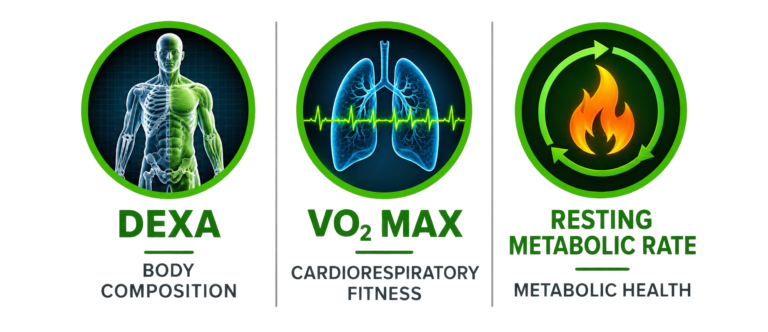
Our Comprehensive Diagnostic combines three gold-standard assessments to establish an objective baseline of your health – only $295 (compare at $325 or more)
Purchase your Comprehensive Diagnostic and you’ll receive 50% off our $700 Healthspan Journey Plan, where we turn your results, goals and priorities into a personalized six-month plan.
Schedule Your Comprehensive Diagnostic →
Live longer. Live better.
Full Episode Transcript
Healthy Habits Episode 10 —
Why Does Everything Hurt
Dr Joe Esposito
Chiropractor and pain management practitioner
Healthy Habits Weekly Briefing
A lightly edited transcript of the September 8, 2026 Healthy Habits session with Dr. Joe Esposito. Filler, captioning errors, and obvious mishearings have been corrected for readability. Statements of clinical opinion remain attributed to Dr. Joe.
[00:00:13] TY HealthSpan
Okay, tonight we have… Dr. Joe Esposito.
Hi, Dr. Joe, how are you this evening?
[00:00:22] Dr. Joe Esposito
I get better every day, man. Couldn’t be happier.
[00:00:25] TY HealthSpan
That’s what I’m talking about.
Well, tonight, we’re glad to have you back. A couple weeks ago, you were on, and everybody, everybody loved having you, and so you, you were,
have been requested numerous times by folks, want to see your, want to see your face, and, talk tonight about why everything hurts.
So I’m just gonna cut you loose here.
[00:00:47] Dr. Joe Esposito
Alright, that is a great topic, actually, because I’ve been in practice 41 years now, and I’m… one of my degrees, I’m board-certified in pain management, and so everybody’s got pain. If I asked anybody, and I said, you know, hey, what hurts right now? You’re gonna say, oh, my foot, my… you know, I think about my elbow, my shoulder, my back, my neck. So, pain is actually good.
Pain is a warning sign that’s telling us that there’s something wrong.
So there are conditions where if somebody, doesn’t feel pain, that’s a very dangerous situation, because they can burn themselves, they can stick their hand in hot water, they can do real serious damage. So pain is there for a reason. It’s to keep us alive. But the management of pain.
is really the key here. So, let’s talk about how the body works. The way the body works is your brain sits up here, in most cases, and sends messages down your spine, out your nerves, to every cell in the body. So right now.
There’s a nerve that makes your heart beat, and your lungs breathe, and your eyes see, and your prostate work, and your hands move, and your eyes blink, and everything is hardwired to the brain.
Two things can affect how a nerve works. Chemical or physical.
Now, chemical would be what? Food, drugs, alcohol, environmental toxins, inhaling gasoline fumes can affect the nervous system. So, chemically, when a patient comes in our office, I do a nutrition workup on them, look at their diet, see what kind of nutrients they’re putting in their body, and then I also talk about their lifestyle, too. What do you do for a living?
I had one girl come in the other day, and she’s got severe back pain. I said, what do you do for a living? I’m a welder.
Okay, well, I took an x-ray, and she’s got severe arthritis, which I’ll talk about in a second, and she’s got what looked like some fractures in her spine. And I said, probably not the best job for you. Yeah, but I get paid a lot of money.
Understand that, but you can’t move.
Pain is telling you this may not be the best job for you. So, chemically, we can alter a nerve, and that’s why I ask people about their lifestyle. And physically, if a bone moves out of place, it creates swelling and can pinch a nerve. I’m gonna keep it real simple here.
Now, if you pinch your nerve, it hurts.
So if I’m pinching a nerve and it hurts, What’s logical? Unpinch it, right?
This is where medicine, traditional medicine, falls short.
Traditional medicine says you have pain, let’s cover up the pain. I have no problem with that.
If you have sciatica, if you have a headache, cover up the pain, absolutely, but find out why you have the pain.
This is the missing link in pain management.
Because let’s assume I go to a medical pain management doctor, and he gives me an injection in my spine, and it helps for a while, but then the pain comes back.
The maximum you should usually give, in most cases, is 3 injections in one spot in a lifetime.
So if I have sciatica pain, I get 3 injections. After the third injection, I really shouldn’t get any more, in most cases.
So that’s when those pain doctors end up calling me up and saying, hey, Joe, I got this patient, I don’t know what else to do. I can’t give them, you know, addictive drugs. I’ve given them the stuff that isn’t working, really. You know, it worked a little bit, but it’s just not working strong enough. I’ve given her 3 injections in the area.
It’s not really a surgical case, although some surgeons will cut you up, because it’s a high-paying business, let’s call it what it is.
And so, they send them to me, and then we find out, oh, the bones are out of place. There’s swelling. Have you got them on an anti-inflammatory diet? Have you tried to open up the vertebrae to bring that disc swelling down? No.
That’s what I do. They don’t do that. So, if you have pain, let… what would… what if we had the most effective, least expensive treatment for back pain? Not the most expensive. Most effective, least expensive treatment for back pain.
Chiropractic care.
That’s it!
In most cases, chiropractic care solves the problem. Without drugs, without surgery, in less amount of time, and for less money.
Absolute no-brainer when it comes to pain management, when it comes to back pain, knee pain, hip pain. So, if you pinch a nerve, it hurts. Unpinch it, then we do therapies like cold laser. Cold laser sends a laser beam, it doesn’t hurt, it’s just red light, into an area, activates what’s called the mitochondria.
Mitochondria are part of the cell that generate electricity.
And if there’s swelling in the body, it can affect how the mitochondria work, which causes more swelling, which affects the mitochondria. Elvis Presley said, I’m caught in a trap, I can’t walk out.
And so that’s usually what happens, you get in this cycle.
Inflammation, pain, pain, inflammation, inflammation, pain. And so we want to break that cycle. Put the bones back in place, get you on an anti-inflammatory diet, use the cold laser. We also have something called acoustic wave therapy, or shockwave therapy, we use in our office all day. The machine’s running almost all day. And it goes really fast, impulses into the joint, breaks up scar tissue.
Increases circulation, and recruits stem cells into the area.
Now, stem cells are the cells that generate new cells. Now, when you’re young, you’ve got a lot of stem cells. When you’re old.
You don’t have as many.
So we can inject foreign stem cells, let’s say from an umbilical cord or something like that. Most of the time… many times, I shouldn’t say most of the time, many times those stem cells are dead by the time you get them injected into you. Because they have to be extracted, they have to be separated, they have to be cleaned, they have to be frozen, they have to be brought to you. So, my approach is, let’s generate your own stem cells if we can.
So, chemically we can alter a nerve, physically we can alter a nerve, and then we put the bone back in place, cold laser, acoustic wave, and nutrition.
Phenomenal protocol, usually amazing results.
Now, here’s a catch.
90% of your nerves Don’t feel pain.
I was given a lecture the other day to a group of orthopedists, neurologists, neurosurgeons, chiropractors, and I was the guest speaker. And I said that statement, and I stopped for a second, and I looked at the doctors in the audience.
I said, everybody here knows that.
But what do you do about it? 90% of nerves don’t feel pain, so you could have damage to a nerve and not know it. And they all kind of looked at each other, and then I went into my rant about chiropractic care and nutrition and inflammation and things like that. So you can have a pinched nerve and know it, but you could also have a pinched nerve and not know it.
So, my clinic, my office, we check the nerves that feel pain, and we check the nerves that don’t feel pain.
And that’s really important. Not a lot of doctors do that. In fact, very, very few check the nerves that don’t feel pain. My third concern, then, is arthritis.
If you have bones out of place, they will rub up against each other, and they will wear out.
How often does that happen if a bone’s out of place? 100% of the time.
If a bone is out of place, it will wear out. That’s the only promise I ever make my patients.
I’ll say, Tom, you have a bone out of place, can I help you? Probably. Chances are very good we can help you, but I can never guarantee it. But I will guarantee, if you don’t get help, if you don’t put that bone back in place, I promise you, it will wear out, you will get arthritis. Now, there’s two types of arthritis, rheumatoid and osteo.
Rheumatoid arthritis, autoimmune disease. My body is attacking itself.
Osteoarthritis, bones out of place rubbing up against each other.
So, here comes logic again. If the tires on my car are out of alignment, what do I do? Put them back in place. If the bones in my spine are out of alignment, what do I do?
Put them back in place.
For some reason, that message just doesn’t get through to a lot of people.
And I don’t understand why.
Because it’s so simple. And then there’s also got to check muscles. If muscles are in spasm, muscle can pull a bone out of place, too, and that can cause swelling and irritation and pinch of nerve. And so, we balance the muscles as well.
A good example is scoliosis, if your spine is curved sideways.
In scoliosis, every case I’ve ever seen, I’ve been doing this for 41 years, every case I’ve ever seen, there is a spasm of a muscle called the psoas muscle, P-S-O-A-S.
And… you gotta start by releasing the psoas.
And I don’t know why, and it takes maybe 10 seconds to release a psoas muscle, it doesn’t hurt either.
So there are doctors out there that put people in braces. They’ll do this horrible surgery, unless it’s necessary, where they cut the spine open and put a rod in there, and then sew the person back up.
What usually happens over time is that rod starts to bend.
Because they never fix the imbalance of the musculature.
So… I live in a very frustrated world here, because so often I have the answer.
Put the bones back in place, get an anti-inflammatory diet, use adjunct therapies like acoustic wave therapy, cold laser, there’s others.
Check the musculature.
Now you have a healthcare plan.
Many people have health insurance.
But they don’t have a healthcare plan. There’s a big difference there.
So when patients come to our office, we check the nerve supply, we check nerves that feel pain, nerves that don’t feel pain, we usually take x-rays, check the structure, see if there is arthritis. If there is arthritis, it usually takes longer to get the results than if it’s a really new injury. We look at the nutrition protocol. Is the patient eating things that can cause inflammation?
Now, you’re not gonna like me when I say this part.
Don’t get mad at me. Don’t get mad at me. Don’t shoot the messenger.
I call the foods that cause inflammation the seven deadly sins of nutrition.
And those 7 foods are alcohol, meat, sugar, dairy, coffee, soda, and artificial sweetener. Now, collectively, everyone who’s ever going to listen to this at the end of time is going to say, that’s my whole diet, or that’s a good portion of my diet.
I’m not asking you to be perfect. I’m asking you to just start making moves in the right direction.
Let’s give up the dairy products, and let’s see if that brings down the inflammation.
You may have gut pain. He says, why does it hurt all the time? People have gut pain every day.
They’ll have cramping up, diarrhea, constipation, acid reflux, burping gas, and sometimes it’s so simple by just giving up the dairy.
And usually, if you give up the dairy, you want to give up the wheat as well. I know that’s a hard one, breads, cookies, cakes, donuts, pastas, but the wheat and dairy are the two most, hyperallergenic foods. So we get you off the wheat and the dairy, give me a week or two, see what happens. Here’s the thing, let’s assume I’m wrong.
So what? I’m wrong. You gave up wheat and dairy for a week or two, you call me a liar, go back to eat wheat and dairy, move on with your life.
But if I’m right… Which I am.
You’ll say, oh my gosh, I feel so much better without the wheat and the dairy.
I’ve consulted thousands, perhaps tens of thousands of patients.
I mean, between radio and television and books and podcasts and guests on podcasts.
We reach tens of thousands of people a week, so add that up over 40 years, and it wasn’t always like that, though.
And I’ve never, ever.
Had somebody come back to me and say, Dr. Joe, I gave up the wheat and the dairy, and I regret it.
Never happened.
Well, my sinuses isn’t running as much, my digestive system is better, the gas is improved, the bloating is better.
I have more energy, my sex drive’s coming back, my vision starts to clear up. I’ve heard everything happen.
Simply by cutting out the wheat and the dairy, which brings down the inflammation.
Alcohol?
There is no safe level of alcohol. I wish there was, but there’s not. So, here’s the protocol.
Get the nervous system checked.
Come see us, see us experts. Not a lot of people do everything that we do, but if you could find one, good. Then let’s check your digestive system.
Sometimes, really simple, the stomach, which sits below the diaphragm, pushes up into the diaphragm. And that can cause heartburn, acid reflux, burping, gas, bloating, bad breath.
I was at a party at a place called Lake Lanier. I know people from all over the world listen to this. Lake Lanier’s a big lake here in Georgia, and I was there last weekend, and I was floating around, and there was a bunch of, like, 50, 60 people floating around in this one little cove, and I was on a noodle, some people were on rafts and stuff, and there was a guy on a boat.
Okay? So he’s… 15 feet away from me? 10 feet away, maybe?
And I’m chatting with a friend of mine.
And he says, I know that voice. You’re Dr. Joe.
I said, he goes, oh my god, I listen to you all the time, you have the best radio show in the world, on and on and on and on. And as I’m sitting there, I could smell his breath.
So I knew right away his digestive system was in dire straits. I mean, it was bad.
I don’t want to say anything to him, of course. But if we can fix the nervous system.
Put the bones back in place, balance out the muscles.
Fix the digestive system, the heartburn, acid reflux, burping, gas, bloating, pull the stomach away from the diaphragm. Sometimes it’s as simple as taking Dr. Joe’s digestive enzymes.
It’s about 10 cents a pill.
Really cheap. Take a digestive enzyme with each meal.
Sometimes that fixes the problem, because it helps digest the food, brings down the inflammation.
And so we check the nervous system, we check the digestive system, we look at their diet, we put together a protocol, and we get to the cause of the pain, and not just treat the symptoms.
It’s a unique approach, but 40 years ago, I’ve been doing this, well, 41 years now, I’ve been doing this for so long that we didn’t have a word for it. Now there’s actually a word for it.
It’s called functional medicine.
Getting to the cause of the problem.
Now, we can do chiropractic care, we can do nutrition, I can do blood work on a patient, I can do urine tests, I can do a hormone test, and once I see the results, then I can say, okay, based on this, we’re gonna do this, this, this, this, and this.
So it’s really cool when you actually have a purpose, in your practice instead of just covering up the pain. And that’s why after 41 years, I love what I do. I’d love to be your doctor.
So, if you want to make an appointment to come see us, you can go to my website, Dr.Joe.com, D-R-J-O-E dot com. It says, book an appointment. If you have any questions, you can email me directly through the website, it says, ask a question.
DrJoe.com, I’ll answer your questions personally. So, I want to help get you well and keep you well. So, whatever those health concerns are, reach out to my website, I’m happy to do what I can.
To try to get you where you need to be.
You still there, Tom?
[00:14:52] TY HealthSpan
Yes, sir.
[00:14:53] Dr. Joe Esposito
Alright.
[00:14:54] TY HealthSpan
Let’s get started.
[00:14:55] Dr. Joe Esposito
Trying to stay within my 15-minute, range here.
[00:14:58] TY HealthSpan
Oh, yeah. Well, you can pack it in. I think we got a… we got a couple of questions. You would…
Talk a little bit more about some of these… some of these other… other therapies, the shockwave and… and the…
The other one that you mentioned? The laser, yeah.
[00:15:17] Dr. Joe Esposito
Yeah, laser we use on almost every patient.
We certainly, if they need it, we offer it to them, and most people want it. And it’s a cold laser, it’s a red light, and you don’t feel anything.
Usually you have to wear goggles, because it’s extremely light, unless you look directly in it, it’s not gonna cause any damage, and don’t look directly in it, pretty much.
And we use it for everything, for peripheral neuropathy, for circulation, for regenerating discs.
bring down swelling, helping damaged muscles. So in a cold laser, there’s settings for just about everything. There’s even settings for infections and headaches, and just crazy what the cold laser usually does.
And then the acoustic wave, it’s…
I had a bad shoulder, and I had done everything. I had done injections, chiropractic care, I had MRIs, I had DEXA scan, I’ve done everything, and we started incorporating, when we got this machine a couple of years ago, I said, well, heck, let me try this.
And it hurt.
It’s about a 5-minute treatment, it’s about 8 treatments total. And the first one hurt, because it was breaking up scar tissue, and then after about the third treatment, I didn’t have any pain anymore, and now I have full range of motion in my arm, no more headaches, no more shoulder pain. It’s just phenomenal. I’ve had countless patients come to me saying, I need a shoulder replaced, I need a hip replaced, I need my wrist replaced.
And we do the acoustic wave and realign the joints, get them on a protocol, and…
Several times a week, people come to me and say, hey, guess what? Three different doctors said I need a knee replaced, I could walk up the stairs now.
Now, is it gonna fix the knee? Not if it’s that worn out, but we can usually get it to the point we don’t need the surgery. So, it’s pretty cool.
[00:16:52] TY HealthSpan
That’s fantastic.
Very interesting about the nerves that don’t feel pain. I mean, the…
I guess, try to explain that in… maybe in layman’s terms. So, the nerves themselves… do nerves… I mean, I think typically people feel like the nerves… do they deliver the pain messages that are occurring from the muscle tissue?
Correct.
[00:17:20] Dr. Joe Esposito
Well, I punch you in the arm, okay? You and I are horsing around, I punch you in the arm. The brain sends afferent messages up to the brain along a tract called the lateral spinal thalamic tract. It goes up into your brain, your brain says, hey, Joe just punched me in the arm, and it hurts. Sends a message back to the arm, and you pull the arm away. It happens within split seconds.
So, that’s how we feel pain, but there’s also something called the autonomic nervous system. I remember autonomic is automatic. You don’t feel your blood pressure, your spleen, your thyroid, your kidneys, your adrenal glands, your hair grow, all control by nerves.
So, that’s an automatic nervous system. You don’t have any control over it, but that’s how the body works. If we thought about everything, if I had to remember to have my heartbeat, my colon digests food, my kidneys make urine, I couldn’t do it. My brain can’t process all that, so it happens automatically. So those nerves can be damaged, and you’re not aware of it. That’s why we check the nerves that don’t feel pain as well.
[00:18:13] TY HealthSpan
Wow.
I’ll tell you what, that’s gonna be news to a lot of people.
[00:18:18] Dr. Joe Esposito
It always is, yeah.
[00:18:21] TY HealthSpan
Talk a little bit more about… about inflammation. It seems… it seems as though, based on the… your last visit with us here at Healthy Habits and this visit, you… you’re focused a lot on
The things that you should not be doing, and the fact that inflammation really is sort of the key to a lot of maladies.
[00:18:43] Dr. Joe Esposito
It’s linked to every disease known to man.
So, for example, if I look at an Alzheimer’s patient, I can try to figure out why they have Alzheimer’s, but I think, okay, what’s inflaming their brain?
Now, there’s other protocols as well, but what are they doing to inflame their brain? If I look at somebody’s chronic pain patient, why are they inflamed? Somebody with colitis, irritable bowel syndrome, Crohn’s, why are their bowels inflamed?
So, inflammation is a natural process. Let’s go back to me punching you in the arm, Tom. I punch you in the arm, it’s a little swelling. It protects that area. It creates, like, a cast around that area and says, okay, let’s protect that arm. The problem is when inflammation is then aggravated by lifestyle, diet.
Not getting enough sleep, dehydration, lack of nutrients. Most people are nutritionally deficient. Up to 95% of people in this country are deficient in vitamin D.
Why doesn’t everybody take vitamin D? It costs about 3 or 4 cents a day to take it.
[00:19:37] TY HealthSpan
So…
[00:19:38] Dr. Joe Esposito
We have to look at deficiencies and why the body isn’t working properly, and so that’s why we try to do a nutritional protocol to mitigate the damage that you’ve done, and then replace those deficiencies so that the body can function normally again.
And you’re causing a lot. You metaphorically, you know, you out there, are causing,
A lot of the inflammation.
Perfumes, hairsprays, colognes, new car smell.
Things you stick in the wall to make your house smell like a pine tree. All of those are inflammatory chemicals.
So we’ve got to live a much purer life if we’re going to plan to make it through this thing.
[00:20:18] TY HealthSpan
Well, I don’t… I don’t see any… any other questions coming in, so I think that’ll… that’ll be great. I think, if you don’t mind, I’m going to go ahead and pull up this,
I’m gonna go ahead and pull up this offer that we have tonight, special offer that we’re making.
for, let’s see here…
Here at TY HealthSpan, we have a service called the Comprehensive Diagnostic. I know that you’re a big fan
When you came in a few, few weeks ago of the, of the DEXA scan. Yep. And then, of course, this particular grouping of, of, of diagnostics is really, is really important. We, we also do the VO2 max test.
Which is a measure of how well your body uses oxygen. You want to talk about that for a second?
[00:21:13] Dr. Joe Esposito
Oh, absolutely, yeah. I mean, oxygen is so important. Everything hap… without… of course, without oxygen, we’re dead. You know, we can go without water, we can go without food, we can’t go without oxygen but a few minutes. And so, is your body utilizing that oxygen? And that’s the key, and that’s why when I had my test with you guys, I just… I was so excited about my results.
Most of my scan was wonderful.
Which I was very happy with. But that’s why you test, and now I have a baseline. So a year from now, when I come in for my follow-up.
I can say, okay, this is my baseline, this is where I am now.
What’s changed? Well, gosh, Joe, we talked about, I don’t know, inflammation of your knee, whatever it was. And what you did now is showing improvement. Hey, you know what? We’re still seeing that fatty liver.
We probably want to start addressing that a little harder. Let’s talk about what you’ve done so far. Well, I didn’t do anything, I got the first test, I didn’t really think it was a big deal. Okay, let’s go to the next level. But the oxygen is so important, because that makes your brain work.
Makes everything work. So, that’s why I love how many different, tests we can do when we do this scan, and what do we do with that information? And that’s why a lot of folks have had to test come to me and say, alright, Dr. Joe, here’s my findings, what do I do with this information? I’ll give them a protocol, let’s get them on a protocol, let’s do the follow-up scan, let’s see how we did.
[00:22:29] TY HealthSpan
And, how are you feeling about that resting metabolic rate? That’s a… that’s a pretty, pretty important one as well.
[00:22:38] Dr. Joe Esposito
Well, they’re all important, you know, I don’t know, it’s like Sophie’s Choice here, which one is the best one? The resting metabolic rate is huge, because, if your body isn’t metabolizing… in fact, all disease is a metabolic issue.
I’m giving a lecture in a couple of weeks to a group of therapists, psychiatrists, psychologists, and my approach, my topic, is mental health as a metabolic disorder.
Because we can do talk therapy, and I’m a huge fan of talk therapy, I’m a huge fan of counseling, but if you don’t have the right nutrients, the brain can’t work properly. If you don’t have the right nutrients, you can’t heal properly.
And so, somebody sent me an email today, as a matter of fact, and said, Dr. Joe, we’ve been to couples counseling, we’re not getting anywhere.
Is there anything you can do for us?
And I said, yeah, let’s get you healthy so that you can work through these issues.
So that’s why the resting metabolic rate is so important, to find out where you are, and then again, what do you do with that information? I’m happy to help you with that.
[00:23:34] TY HealthSpan
Great stuff. Yeah, so if… for anybody that’s on here, if you are interested in checking out the comprehensive diagnostic, getting a baseline, a great baseline from 3 of the best diagnostics that you can get for yourself, normally costs $2.95. Tonight, 20% off.
Use the code FIRSTSTEP20 on checkout, and if you don’t want to use the QR code, the full URL is at the bottom of the screen.
And,
Dr. Joe, thanks again for coming on. We’re always glad… always glad to have you. We’re always very, very informative, and we always learn a lot, and it’s great.
[00:24:14] Dr. Joe Esposito
I appreciate you guys, too. Anything I can do for anybody listening, or you, just let me know.
[00:24:18] TY HealthSpan
Great. Thank you, sir. Have a great evening.
[00:24:20] Dr. Joe Esposito
Thanks, man, appreciate you.
[00:24:22] TY HealthSpan
Take care.