
On the Run? Keep Your Nutrition on Track
Healthy Habits Weekly Briefing
Episode 9 - September 1, 2026
Featured Presenter: Page Love
TY HealthSpan In-House Nutritionist
When schedules get busy, nutrition is often one of the first things to slide. A missed breakfast can turn into a long stretch without food, an afternoon energy crash, and cravings that make the easiest choice feel like the only choice.
In this Healthy Habits session, registered dietitian Page Love shares practical ways to stay ahead of that cycle. From quick breakfasts and portable snacks to smarter restaurant choices and simple grocery shortcuts, she shows how a few reliable habits can help keep your meals balanced and your nutrition on track — even when you are on the run.
Click below to watch previous episodes
or register for an upcoming live briefing.
Episode Summary
Busy schedules can make healthy eating feel needlessly complicated. In this episode, registered dietitian Page Love explains how regular meals, balanced snacks, and a little advance planning can help prevent energy crashes, late-day cravings, and the tendency to grab whatever is easiest.
She shares a practical framework for building meals around quality carbohydrates, protein, healthy fats, fruits, and vegetables — then turns it into real-world ideas for rushed breakfasts, work and school snacks, restaurants, and simple dinners at home. The goal is not perfect eating. It is making the healthier option easier to follow when life gets busy.
What You’ll Learn
- Why long gaps between meals can lead to low energy and stronger cravings
- How to build a balanced meal with carbohydrates, protein, healthy fats, and produce
- Quick breakfast ideas that work when you are rushing out the door
- Portable snack combinations that can help carry you to your next meal
- How to make salads, wraps, and bowl meals more complete and satisfying
- Practical grocery shortcuts for busy days
- Healthier ways to approach restaurant and fast-food meals
- How to think differently about afternoon and evening cravings
“Snacks” from this Episode
We’ve summarized the key points of this episode for you below.
What is the simplest way to stay on track when life gets busy?
Page Love’s advice is to avoid letting too much time pass without eating. Start the day with breakfast, eat regular meals, and plan a snack when there will be a long gap between them. A few reliable routines can help prevent the late-day crash that makes whatever is closest look like the best option.
How can you tell whether your schedule is throwing your eating off track?
Look for patterns: skipping breakfast, missing meals, long gaps without food, low energy, or intense cravings late in the day. Page suggests doing a quick self-check: Are you prepared with a meal or snack when you know you will be away from home for hours?
How often should you eat?
Page’s general rule of thumb is to eat about every three to four hours. If a meal gap will be longer than that, she recommends planning a snack in the middle. The goal is not to eat constantly; it is to avoid arriving at the next meal so depleted that a balanced choice becomes difficult.
Why does skipping meals often lead to cravings later in the day?
When you wait too long to eat, hunger and low energy can make quick, calorie-dense foods much more appealing. Page’s practical point is to distribute meals and snacks more evenly through the day instead of trying to make up for missed food at night.
Why should you not skip breakfast?
Breakfast is an opportunity to break the overnight fast and begin the day with actual fuel. Page recommends a simple combination of fiber-rich carbohydrate, protein, and fruit rather than waiting until midday and hoping hunger does not catch up with you later.
What are realistic breakfasts when you are rushing out the door?
A balanced breakfast does not need to be elaborate. Page suggests options such as a bagel with a yogurt smoothie, a peanut butter sandwich, a breakfast wrap with egg, or yogurt with granola and fruit. The point is to get some useful fuel in before the day runs away from you.
What makes a busy-day meal balanced?
Think in components: a quality carbohydrate, protein, a little healthy fat, and fruits or vegetables. A wrap with lean protein and vegetables, a whole-grain bowl with beans or chicken, or oatmeal with berries and an egg can bring several of those pieces together without requiring a complicated recipe.
What counts as a quality carbohydrate?
Page emphasizes fiber-rich, minimally processed choices such as whole grains, brown rice, potatoes, corn, beans, lentils, edamame, fruits, and starchy vegetables. The goal is not to eliminate carbohydrates, but to choose more useful sources and spread them through the day.
Why pair carbohydrate with protein?
Carbohydrates provide fuel, while protein can make a meal or snack more satisfying and help carry you to the next eating opportunity. Page recommends combining the two rather than treating carbohydrates as something to avoid altogether.
Do you need to avoid fat to eat healthfully?
No. Page recommends including modest amounts of fats such as nuts, avocado, nut butter, olives, hummus, or olive-oil-based dressings. A little fat can add flavor and staying power to a meal; the practical question is usually the type and portion, not whether fat belongs at all.
How can fruits and vegetables fit into a hectic day?
Use them as easy sides and snacks, not just as a formal dinner obligation. Fruit, raw vegetables, frozen vegetables, smoothies, salad additions, and ready-to-eat produce can all make it easier to add color and variety when cooking time is limited.
What makes a snack more satisfying?
Choose a carbohydrate-and-protein combination rather than relying on a single snack food. Fruit and string cheese, yogurt with a whole-grain snack, vegetables with hummus, or crackers with an individual nut-butter packet are portable examples that can offer more staying power.
What portable foods are worth keeping on hand?
Page recommends taking advantage of convenient, portion-controlled options. Individual nuts, whole-grain crackers, popcorn, yogurt, cheese, tuna packets, hard-boiled eggs, hummus, guacamole, fruit, and raw vegetables can make it much easier to have a reasonable choice available at work, school, or in the car.
Do individually packaged foods have a place in a healthy routine?
They can. Individual portions of nuts, crackers, hummus, guacamole, nut butter, or other snack foods can be convenient and help make portion awareness easier. The advantage is having something useful available when you need it, rather than having no plan at all.
What role does hydration play in a busy-day eating plan?
Page recommends having a hydrating beverage with meals and snacks, especially during hot weather. Staying hydrated supports the day’s routine and can also help you distinguish thirst from hunger.
Can a salad be a complete meal?
Absolutely, but vegetables alone may not hold you for long. If a salad is the meal, add meaningful protein and a carbohydrate source such as beans, lentils, brown rice, sweet potato, or whole-grain bread. A bowl meal, soup, or sandwich can also round out a salad when needed.
What should you do when afternoon cravings hit?
Instead of treating a craving as a willpower problem, Page suggests asking what your day may be missing. If you have not had fruit, dairy, or a substantial snack, adding one of those may be more satisfying than heading straight for the office candy bowl.
Can fast food still fit into a busy day?
Yes, if you focus on the components of the meal and keep portions realistic. Page points to choices such as grilled chicken, fruit, yogurt parfaits, salads with protein, and build-your-own bowls with brown rice, fish or lean meat, and plenty of vegetables. You do not need a perfect order; you need a more balanced one.
What are some better options when ordering at a restaurant?
Look for a protein, a useful carbohydrate, and vegetables. Bowl restaurants can make this easy: add beans, lentils, brown rice, sweet potato, fish, chicken, or lean meat along with plenty of vegetables. A salad can work well, too, as long as it includes enough protein and substance to be a meal.
Do quick grocery options count?
They do. Microwaveable whole grains, frozen vegetables, ready-to-cook seafood, pre-washed produce, and other convenience foods can make a balanced meal far more realistic on a weeknight. Healthy eating does not require gourmet cooking, but it does require having a few useful ingredients available.
Why is a shopping list part of a healthy eating strategy?
A shopping list turns good intentions into food you can actually use. Keeping a few dependable breakfast, lunch, dinner, and snack items at home makes it much easier to put together something balanced when time is short.
Can meal kits help with busy schedules?
Meal kits can be useful for people who want a shortcut to a balanced lunch or dinner. They can reduce prep work, provide portioned ingredients, and introduce new meal ideas. Options range from cooking kits to meals that require only minimal assembly or reheating.
Is there a simple way to review your eating patterns without obsessing over numbers?
Page mentions visual food logging as one option. A photo-based record of meals and snacks can help you notice timing, variety, and whether meals are balanced without turning every food decision into a calorie calculation.
What kind of peanut butter does Page recommend?
Page generally recommends natural nut butters with fewer added hydrogenated fats. Peanut, almond, and cashew butter can all work. If natural peanut butter separates, stirring the oil back in or storing it upside down before opening can make it easier to use.
About Healthy Habits Weekly Briefing
Healthy Habits Weekly Briefing is TY HealthSpan’s free weekly series featuring practical, evidence-based guidance to help you live longer and live better.
Each session explores topics like nutrition, exercise, metabolic health, recovery, and healthy aging, with actionable advice you can use right away. Browse the videos, transcripts, and Healthy Habits Snacks to learn at your own pace.
Join us every Tuesday live at 7pm ET, or explore previous episodes any time. Registration is free and provides access to all live Healthy Habits Weekly Briefings with a single link. Episodes last about 30 minutes.
About TY (Transform Your) HealthSpan
TY HealthSpan delivers true precision health: gold-standard diagnostics, science-based insights, and clear, personalized plans designed to help you live longer and feel better.
We don’t rely on estimates. We measure what matters, help you understand what the numbers mean, and show you what to do next.
Ready to Take Your First Step Toward Wellness and Longevity?
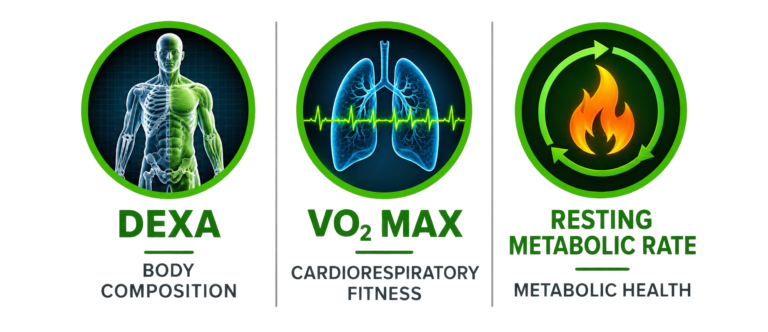
Our Comprehensive Diagnostic combines three gold-standard assessments to establish an objective baseline of your health – only $295 (compare at $325 or more)
Purchase your Comprehensive Diagnostic and you’ll receive 50% off our $700 Healthspan Journey Plan, where we turn your results, goals and priorities into a personalized six-month plan.
Schedule Your Comprehensive Diagnostic →
Live longer. Live better.
Full Episode Transcript
Healthy Habits Episode 9 — Keep Your Nutrition on Track
September 1, 2026
Presented by Page Love, Registered Dietitian
Well, hello. I want to welcome everybody to the TY HealthSpan Healthy Habits series. I’m Page Love. I’m a registered dietitian, and I’m going to be talking to you about how to stay on track with busy fall schedules, whether you’re a student or somebody in a work setting who is finding that your schedule has gotten chaotic and you’re having trouble keeping on track with your eating.
We’re going to talk about simple ways to do that, things to keep in mind to have a balanced menu, and practical resources to aid you in this process. I think it’s a good idea to do a little self-assessment as we approach this topic today. Right off the bat, how are you doing with consistency with meals?
Are you eating breakfast? Are you missing meals? How often are you eating? What’s the time span in between eating? Are you allowing yourself a snack if you have a larger gap of time? Are you coming prepared with the tools? Are you pre-making snacks and meals and bringing them to your workplace or school?
Do you notice that, if a large gap of time goes by, you have unusually low energy or stronger cravings for energy-dense sweets or things that are a little less healthy? This often happens when we get off track with our scheduling, and I’m going to give you some simple reminders of things to put into place.
I thought I would start by going through the basic macro needs of what our body needs nutritionally, because this should still be the base of a quick and easy menu plan. Starting with carbohydrates, which are your main fuel to get you through the day, the bare minimum we want to make sure we get is one cup per meal, or one choice per meal, from good-quality, fibrous carbohydrates.
A lot of people are following gluten-free diets, so look for more natural starchy vegetable and gluten-free sources such as brown rice, potatoes, corn, legumes, and edamame. Those are all naturally gluten-free. Move more toward whole foods versus processed foods, but allow this source at every meal and even a small portion at snack time, too, because it is critical for getting you the fuel to function.
A few tips and reminders on how to handle carbohydrates: a lot of people think they should not have them. If you’re choosing whole grains, high-fiber sources, and distributing these evenly throughout the day, one choice per meal is a useful guide. If you’re trying to lose a little weight or get a little leaner, you can reduce that amount a little at night, but I would suggest a smaller portion rather than complete avoidance, because that can lead to sweet cravings.
It’s also important to combine carbohydrate with protein at every meal and snack. A fibrous carbohydrate should be the base of a meal, but carbohydrates also include fruits and vegetables, which can work very well at snack time, too.
Common sources of protein include meat and dairy, but a lot of plant-based alternatives are becoming popular, too. That might be a veggie burger, tofu, bean soup, a large serving of beans, or a smoothie with protein powder. These are all ways to meet protein needs.
As a practical food-group minimum, we want to aim for about six ounces of meat or meat alternatives and two to three cups of dairy per day. Dairy can include milk, yogurt, cottage cheese, and cheese. We also get trace proteins from vegetables and grains. When you hear about higher daily protein targets, remember that protein is coming from several food groups, not only meat.
The denser proteins are dairy and meat or meat alternatives. We want these, particularly meat and dairy, at mealtime. That also helps with the carbohydrate-protein combination that can make a meal more satisfying and carry your hunger to the next meal or snack.
Then we want a little fat. I talk about having a dab of fat at each meal, with a focus mostly on vegetable fats over saturated fats. Think olives, nuts, avocado, nut butters, and lighter oil-based options. When something is heavy, like mayo, ranch, or Caesar dressing, you might look for a lighter alternative or use oil and vinegar instead. Hummus has olive oil and tahini in it, and guacamole is another option in this group.
Fat can add staying power to meals. When you have a little fat in there, you may notice that you stay fuller longer, which can help with cravings. Avoiding all fats is not a good idea, so make sure you are allowing adequate fats throughout meals and snacks.
Then fruits and vegetables: go to town in this category, particularly with vegetables. I’m listing what I call super fruits and super vegetables, which are more nutrient-dense because they are color-rich. We want to shoot for at least five a day from this category, with a fairly even distribution between fruit and vegetables, though I would side with more volume in vegetables.
Color variety can also help with nutrient and antioxidant variety. If you’re already getting that fall cold, apparently there are some viruses creeping around already, so we want to make sure we are getting a lot of colorful fruits and vegetables. They work very nicely at snack time and as sides for meals. This entire group can get thrown into a smoothie, and if you are having cravings later in the day, you can bulk up on vegetables to help with fullness.
So, right off the bat, don’t miss breakfast. I’m not a huge fan of intermittent fasting. I find that people often have only short-term success with it because they may end up moving into less healthy eating and stronger cravings later in the day. We want to break that overnight fast with a high-energy start to the day that has fiber from grains, protein from dairy or something like egg, and a fruit source.
All of those food groups in moderate amounts can make a quick, great breakfast. Even breakfast on the run can work. I hate to say it’s okay to eat in your car, but I’d rather you eat in your car than not eat. It might be a bagel on the run, an energy bar paired with a yogurt smoothie, or even a peanut butter sandwich for a child running out the door to school.
A breakfast wrap made with egg, a peanut butter breakfast wrap, or yogurt parfaits with granola and fruit are all examples of one item where you have several food groups together. These are carbohydrate-protein combinations that can be put together quickly to help you get breakfast in and start the day with some fuel.
There has been research for quite some time showing that when we miss breakfast, we can be more likely to overeat or make less healthy choices later in the day. We just don’t do as well when we miss breakfast.
Most of us need one to two snacks a day. Pick something from each category to take with you to work or school. For carbohydrates, think whole grains, fresh fruit, or vegetables. For proteins, think quick, portable options: yogurt, string cheese, lunch meat, small tuna portions, individual peanut butter packets, or hard-boiled eggs.
I’m not going to focus a lot on hydration today, but we do want to have a hydrating beverage at every meal and snack. We had a whole TY HealthSpan Healthy Habits session last month on hydration, so you can visit our website and listen to that presentation. But we do want good sources of hydration throughout the day, particularly to keep up with the extreme heat we are still having.
Hydration can help with fullness, too. Sometimes we mistake thirst for hunger, and when we drink more adequately, we may feel more naturally full.
Take advantage of individually packaged healthy options. This is just a small example of some things I commonly recommend. I have an Instagram account where I post grocery items that are trending, portable, and healthy.
OH SNAP! is a portable pickled vegetable line in individual portions. They have carrots, snap peas, green beans, and pickles. Individual nut portions are a quick protein option and a good source of vitamin E. Portion-controlled packs can be useful because, if you are eating from a large can or bag, it is easy to eat a lot more than you intended.
Individual grain snacks can work well, too: whole-grain crackers, individual pretzel packs, popcorn, and other portioned choices. I also like Justin’s Natural nut butters in individual packets. If you need a little more protein in a snack, cheese, dried meat, and nut combinations such as P3 packs can be shelf-stable options to keep in a purse or bag.
Individual guacamole packs work well as dips for vegetables, pretzels, or crackers. Individual hummus packs are similar and also provide some garbanzo bean fiber.
This graph is from a researcher I studied under at Georgia State, Dan Benardot, and I think it pulls together what we have been talking about. When you eat frequently, as in eating pattern one, each swing up in the curve is a person eating a meal. Each swing down is energy expenditure from normal daily activity and exercise sessions.
In eating pattern one, the person eats breakfast, has a significant energy expenditure, has lunch, snacks through the afternoon, and has normal daily movement. By the end of the day, they are in energy balance. They are eating frequently and consuming what their body is burning. That is the ideal scenario.
The takeaway is that we want to eat frequently. A rule of thumb is eating about every three to four hours. Some people need to eat every two to three hours. If your meals are spread out five hours apart, plan a snack in the midpoint of that time period.
Eating pattern two shows that when you eat less frequently, you may get hungrier, overconsume, and not expend enough to meet that extra consumption. The meals are more spread out, and the person may be more prone to gaining weight.
Eating pattern three is something I see a lot in people who have been dieting for a while. They may restrict early in the day, not eat much, or grab only an apple, yogurt, coffee, or latte. Then they may have an exercise session that burns more calories than they have taken in, followed by a few snacks throughout the afternoon.
By the end of the day, they may be ravenous and not make healthy choices. They may choose calorie-dense meals and back-load their calories. This person may also be prone to losing muscle because they are not meeting their energy needs for daily activity and exercise, while also over-consuming fat and refined carbohydrates at the end of the day.
This is called within-day energy balance. As a dietitian, I look at how people are matching their intake with their expenditure, how frequently they are eating, the size of their meals, and how calories are distributed throughout the day. We want eating to be frequent and distributed more evenly throughout the day.
Another common pattern I see is people choosing salad meals and filling up on vegetables without having a balanced salad meal. If you do this, great for the vegetables, but make sure you get a good protein and a good grain.
Bowl-meal places like CAVA and gusto! provide a good opportunity for that. At CAVA, you can add black lentils and rice. At gusto!, you can add sweet potatoes. Both offer meat options for protein. Getting a grain and protein is important if the salad is your meal. If the salad is simply a side salad with a balanced meal, that is different because you may already have meat and a starch in the meal.
You could also add a soup or sandwich alongside a salad. There are different ways to complement it so it becomes a balanced meal that holds you until your next meal or snack.
What about mid-afternoon or late-day cravings? Rather than going for office sweets or the candy bowl, I like people to think: “What am I missing? What have I not had yet that my body really needs?”
If you have not had fruit, that may be one of the best things to go for when you are having sweet cravings. Dairy can also be helpful. Yogurt or cheese may be satisfying, and fruit has its natural sweetness. Chocolate milk, graham crackers, Teddy Grahams, and dessert yogurts with added fruit can be more real-food options to satisfy a sweet craving.
There are lots of food-based options that can satisfy cravings that you may want to bring with you to your workplace or keep available for school snacks.
Let’s pull together a whole day. With carbohydrate-protein combinations at each meal, you might start with oatmeal, berries, and an egg. You can make oatmeal with milk for additional protein, or choose a higher-protein oatmeal option. It is a relatively light breakfast, but balanced enough to hold you for three to four hours.
Wraps are also popular. A whole-grain wrap with lean poultry, hummus for healthy fat, vegetables inside, fruit on the side, and a hydrating beverage can make a balanced meal. For an afternoon snack, you might have fruit and string cheese. Those are easy to bring to work.
For an evening snack that satisfies a sweet craving, you could have low-fat chocolate milk and graham crackers. For dinner, get a good grain in the meal, perhaps a seafood choice for lean protein, and extra vegetables if you tend to have evening cravings. That may be a cooked vegetable and a salad with Italian dressing, along with a hydrating beverage.
I usually suggest one to two cups of fluid per meal. This pulls together meals and snacks into relatively quick ideas. I’m known as a convenience dietitian, so within each of these meals there are lots of quick things that make this easy to throw together.
With quinoa and brown rice, you can buy options such as Seeds of Change or Ben’s Original that are whole grains and microwave in 90 seconds. You can buy salmon ready to cook at the Publix seafood counter. You can heat frozen broccoli. This does not have to be gourmet cooking to get a balanced meal accomplished when you are on the run.
You do have to shop for these items, so it is good to have key elements on hand. Developing a shopping list is part of what will help you be successful when you are eating on the run. We will have an upcoming Healthy Habits seminar on how to shop and what to keep in mind when you are going through the grocery store.
A couple of resources can also help when you are trying to stay on track. There are apps for food and hydration logging. I really like See How You Eat. I have a lot of clients who become very focused on numbers, so I focus more on visual portions, awareness of balance, and the frequency of eating.
See How You Eat is a picture-based app. You can see your meals and snacks on one screen as a grid of pictures. That can help you see your variety and portions across the day.
Also take advantage of quick grocery options and meal kits. You can get ready-to-eat meals that you simply microwave or meals with components that require minimal assembly. These can be a good way to get recipe ideas, use fresh ingredients, and keep preparation more manageable.
Blue Apron takes a little more time and is geared more toward gourmet cooking. Green Chef, HelloFresh, Sunbasket, and Hungryroot are quicker-prep examples. Some clients use three to five of those meals a week for lunch or dinner, and that can help make balanced meals more practical when they are on the run.
If you have questions and want more information about this topic, feel free to visit my website. I’m also one of the dietitians at TY HealthSpan. You can visit my Instagram as well. I post at least one item weekly, often things that are trending, convenient, portion-controlled, and healthy that may help you execute your eating plan with more ease.
I hope today has been helpful. Tom will be putting together some little tasty bites of summary points from my presentation that will be available through TY HealthSpan.
Question: What type of peanut butter do you recommend?
I prefer natural peanut butters. I put Justin’s up there. Less hydrogenated peanut butters are more heart-healthy for us. Hydrogenated fats are changed in the lab to be more creamy and stay together in that creamy form. More natural peanut butters, which not everybody loves because oil can come to the top, are generally a better choice.
Any nut butter can be a heart-healthy option: cashew butter, almond butter, peanut butter. They are good sources of vitamin E and antioxidants.
Question: Do you have any go-to ideas for fast food?
A place I often get people to think about is Chick-fil-A because they have the grilled chicken wrap, grilled chicken sandwich, kale crunch salad, fruit cup, and yogurt parfait. They have a number of workable options.
During COVID, a lot of healthier options at other restaurants disappeared from the menu and were never added back. If you are limited on the road to somewhere like McDonald’s, a plain hamburger can be a reasonable choice. It is small, with about two and a half ounces of meat, and is not very high in fat. What tends to get us into trouble is adding a lot of condiments and cheese or doubling the burger. Leaning away from fried foods helps as well.
There are options. It is how you order and portion control. Any place where you can get fish can work. Bowl places are useful, including poke-bowl places where you can get brown rice, salmon or tuna, plenty of vegetable toppings, and soy sauce. That is a hearty, filling meal that can give you more vegetables than most fast-food places.
Question: What about the upcoming TY HealthSpan app?
The upcoming TY HealthSpan app will also be able to help with food tracking. You will be able to take pictures and record food consumption, much like some of the apps discussed today.
All right. Thank you all. If there are no more questions, that’s it for tonight. Thanks, Page, for coming out. We really appreciate all the great input. Everybody have a great night.