
Intensity, Consistency and Volume - Common Training Mistakes
Healthy Habits Weekly Briefing
Episode 8 - August 25, 2026
Featured Presenter: Kirby Coggins
Strength Training Specialist
Showing up matters. But consistency alone is not enough to make you stronger.
Kirby Coggins explains how intensity, consistency and training volume work together, why doing too little can stall your progress, and why doing too much can leave you fatigued or injured. Learn how to find the right training balance, recover properly and measure whether your workouts are actually working.
Click below to watch previous episodes
or register for an upcoming live briefing.
Episode Summary
Strength training works when the demand is strong enough to trigger adaptation, manageable enough to recover from, and repeated consistently over time. Kirby Coggins organizes that idea around four connected variables: intensity, volume, consistency, and recovery. The most common mistake he sees is undertraining intensity: using the same weights, stopping at mild discomfort, and finishing every set with many repetitions still available. For most working sets, he suggests ending approximately one to three repetitions before failure, while using appropriate equipment, stable exercise variations, sound form, and coaching when needed.
Volume must also be managed. Too little work produces too little stimulus, but sudden spikes in training load can exceed the body’s ability to recover and raise injury risk. Kirby favors gradual increases and simple tracking of sets, repetitions, loads, steps, and other relevant measures. Consistency begins with a realistic floor, such as two strength sessions per week, and with removing friction by scheduling the same days and times, choosing a convenient gym, or building a properly equipped home setup.
Recovery is where adaptation occurs. Sleep, nutrition, hydration, and attention to pain and fatigue determine whether training can be repeated productively. The final test is objective progress: loads, repetitions, bar speed, resting heart rate, sleep quality, and goal-specific benchmarks reveal far more than soreness or sweat. The practical message is simple: train hard enough, increase work gradually, show up consistently, recover deliberately, and measure what changes.
What You’ll Learn
- Why consistency alone is not enough to produce strength gains
- How intensity, volume, consistency, and recovery work together
- Why ending most working sets one to three repetitions before failure can be effective
- How machines, stable variations, shortened ranges of motion, and coaching can improve safety
- Why sudden spikes in training volume often create fatigue instead of adaptation
- How to establish a realistic training floor and reduce the friction that leads to skipped workouts
- Which objective measures can distinguish real progress from simply feeling tired or sore
“Snacks” from this Episode
We’ve summarized the key points of this episode for you below.
What are the main variables in strength training?
Kirby Coggins identifies three primary training variables: consistency, intensity and volume. Consistency is how often you train. Intensity is how hard you train, including how heavy the weights are and how close a set comes to failure. Volume is how much total work you perform, including sets, repetitions, weights and even steps. Progress depends on managing all three rather than focusing on only one.
What is the SAID principle?
SAID stands for specific adaptation to imposed demands. The principle means that your body adapts specifically to the work you ask it to perform. If you want to become stronger, the training demand must be heavy enough to require greater strength. Simply repeating work your body can already handle comfortably may maintain your current ability, but it gives your body little reason to adapt.
What is the most common strength-training mistake?
The most common mistake Kirby sees is not training hard enough. That may mean using the same weights every session, ending sets when they become mildly uncomfortable or stopping with five or more repetitions still available. Consistency is valuable, but merely showing up and going through the motions may not create enough demand for the body to become stronger.
How close to failure should you train?
Kirby suggests ending most working sets approximately one to three repetitions before failure. This provides a meaningful training stimulus without requiring every set to reach complete muscular failure. The appropriate stopping point depends on the exercise, the equipment, the person's experience and the safety measures available. Newer lifters may benefit from coaching while they learn what genuine high effort feels like.
What is the difference between true failure and form failure?
True muscular failure occurs when you cannot complete another repetition. Form failure occurs earlier, when your technique begins to break down even though you might still be able to force out another repetition. Kirby recommends recognizing form failure and stopping before poor technique creates unnecessary risk. On a bench press, for example, elbows flaring or other major changes in position may signal that the set should end.
What do RIR and RPE mean?
RIR means repetitions in reserve and describes how many good repetitions you believe you could still perform at the end of a set. RPE means rate of perceived exertion and describes how difficult the effort feels. Both provide a practical way to communicate training intensity. A set completed with two repetitions in reserve is demanding, but it stops before complete failure.
Are machines less effective than free weights?
Not necessarily. Kirby explains that the added stability of a machine can make it safer to push a muscle closer to failure. Stability is not cheating. In some exercises, it allows you to use more weight or concentrate more directly on the target muscles without balance becoming the limiting factor. Free weights and machines can both be useful, depending on the goal and the person.
What is velocity-based training?
Velocity-based training uses a device to measure how quickly a weight or bar is moving. As fatigue increases, bar speed falls. Kirby may end a set after two repetitions drop more than 20 percent below the lifter's peak velocity. This can provide an objective stopping point before failure, particularly when the training goal involves speed or power. The appropriate threshold can vary by exercise and goal.
Can too much training volume slow your progress?
Yes. A sudden burst of high-volume exercise can create more fatigue than your body can recover from. That may reduce adaptation and increase injury risk. Kirby contrasts productive training with dramatic spikes in motivation, such as attempting an extreme workload without building up to it. The body may be capable of enduring a single punishing effort without being prepared to recover and improve from it.
How should you increase training volume?
Increase volume gradually and track what you are doing. An app, journal or wearable can help you monitor sets, repetitions, weights, steps or total training time. If your normal workload suddenly doubles, the data makes that change visible. The appropriate rate of increase depends on your training experience, current capacity and recovery, so there is no single progression rate that works for everyone.
What is a realistic minimum training schedule?
Kirby recommends establishing a weekly floor that you can maintain even when motivation is low. For many people, two strength-training sessions per week is a useful starting point. The goal is to stop repeatedly returning to day one. Once the minimum becomes consistent, you can gradually add more time, volume or intensity instead of relying on occasional bursts of all-or-nothing effort.
Will missing workouts erase your progress?
Missing one workout is not the end of the world, and even a two-week vacation is unlikely to erase months of strength training. Kirby notes that people do not lose their strength as quickly as they sometimes fear. The greater problem is chronic inconsistency that repeatedly interrupts the training process. Return to your normal schedule instead of treating a brief interruption as a reason to start over completely.
How can you make training more consistent?
Reduce the friction surrounding the workout. Schedule training for the same days and times, block those sessions on your calendar and choose a gym you will actually visit. The closest gym may be better than the nicest gym, although an appealing facility may be worthwhile if it genuinely motivates you. The best arrangement is the one that makes showing up feel automatic rather than negotiable.
What does a useful home gym need?
A home gym must provide enough resistance to create the intensity you need. A few light dumbbells and resistance bands may be convenient, but they may not be sufficient for continued muscle and strength gains. Kirby recommends investing in equipment that can progress with you, such as an appropriate rack and weight set or a resistance system capable of providing a meaningful challenge.
Can constantly changing workouts limit your progress?
It can when you are trying to improve a specific movement or performance measure. If you want a stronger bench press but rarely train the bench press, you should not expect that lift to improve consistently. Trying many demanding exercise formats can improve general fitness, but specific goals require repeated practice and measurement of the relevant movements. Choose key benchmarks, retest them and adjust your program based on the results.
Why is recovery part of strength training?
Training creates the demand, but recovery is when the body rebuilds and adapts. Kirby emphasizes adequate sleep, sound nutrition and hydration. When performance numbers trend downward, examine recovery as well as training volume. Continually adding work without recovering from it can turn productive training into accumulating fatigue, making progress harder and increasing the chance that technique or control will break down.
Does soreness mean your workout worked?
Not necessarily. Sweat, exhaustion and next-day soreness show that you performed work, but they do not prove that the workout moved you toward your goal. A useful session does not have to leave you depleted. Kirby recommends separating normal muscle soreness from joint discomfort and judging the program by measurable changes over time rather than by how difficult or punishing a single workout felt.
What should you track to measure strength progress?
Useful measures can include the load and repetitions in your top set, bar speed, sleep quality, resting heart rate, joint discomfort and goal-specific performance benchmarks such as jump height. The right measures depend on what you are trying to improve. Tracking provides evidence that the program is working and helps you adjust intensity, volume or recovery instead of relying entirely on memory and subjective feeling.
How can older adults increase intensity more safely?
Kirby recommends selecting exercise variations that add stability or use a comfortable range of motion. Options may include a belt squat instead of a barbell squat, a floor press instead of a full-range bench press or a deadlift raised onto blocks. Safety bars, spotting, machines and grip changes can also help. The exercise should feel mechanically comfortable, and the best substitution depends on the individual.
What is the best time of day to work out?
The best time is largely personal. Morning training can ensure the workout happens before work and fatigue interfere. Midday may suit someone whose energy peaks then, while athletes may benefit from training near the time their event occurs. Evening may be the only practical option, although late exercise can keep some people awake. Choose the time that fits your body, goals and schedule consistently.
About Healthy Habits Weekly Briefing
Healthy Habits Weekly Briefing is TY HealthSpan’s free weekly series featuring practical, evidence-based guidance to help you live longer and live better.
Each session explores topics like nutrition, exercise, metabolic health, recovery, and healthy aging, with actionable advice you can use right away. Browse the videos, transcripts, and Healthy Habits Snacks to learn at your own pace.
Join us every Tuesday live at 7pm ET, or explore previous episodes any time. Registration is free and provides access to all live Healthy Habits Weekly Briefings with a single link. Episodes last about 30 minutes.
About TY (Transform Your) HealthSpan
TY HealthSpan delivers true precision health: gold-standard diagnostics, science-based insights, and clear, personalized plans designed to help you live longer and feel better.
We don’t rely on estimates. We measure what matters, help you understand what the numbers mean, and show you what to do next.
Ready to Take Your First Step Toward Wellness and Longevity?
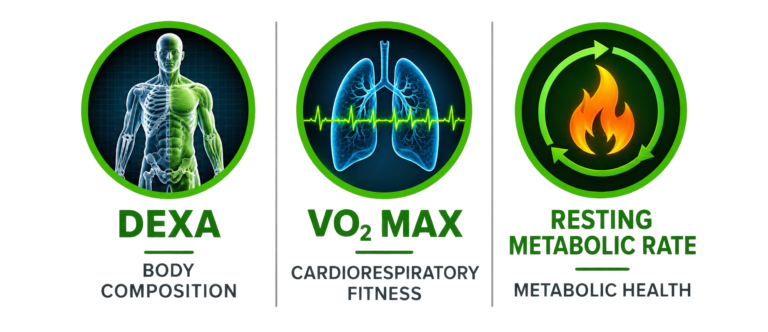
Our Comprehensive Diagnostic combines three gold-standard assessments to establish an objective baseline of your health – only $295 (compare at $325 or more)
Purchase your Comprehensive Diagnostic and you’ll receive 50% off our $700 Healthspan Journey Plan, where we turn your results, goals and priorities into a personalized six-month plan.
Schedule Your Comprehensive Diagnostic →
Live longer. Live better.
Full Episode Transcript
Kirby Coggins
August 25, 2026
Topic: intensity, Consistency and Volume: Common Strength Training Mistakes
Healthy Habits Episode 8
[00:00] Kirby Coggins
Let’s dive into this week’s episode on common mistakes involving intensity and consistency in strength training. I added volume to the presentation because, the more I thought about it, the more I realized there are several ingredients. These three cover most of the bases.
[00:44] Kirby Coggins
The three variables I’ve identified are consistency, intensity, and volume. Consistency is how often you show up. Intensity is how hard you’re training. Volume is how much work you’re doing. Think of consistency as how many days a week you train, intensity as how heavy the weights are, and volume as the number of repetitions. In the context of a 10,000-step goal, the 10,000 steps would be the volume. You need to make progress in all three areas to see results.
[01:32] Kirby Coggins
In strength training, the SAID principle means specific adaptation to imposed demands. Your body gives you what you train for. It changes only when you ask it to do more than it is used to doing. If you’re not lifting heavy, your body is not going to adapt to lift heavy.
[02:02] Kirby Coggins
Recovery allows your body to build from the demands you place on it, and consistency allows you to compound those adaptations and make more progress over time. You may not need to push all the way to failure to get most of the results you’re looking for. I’ve heard it said that your body can endure more than it can adapt to. You may be capable of willing yourself through a marathon or half marathon, but that does not mean you should do it without building up to it.
[03:20] Kirby Coggins
The number-one mistake I see in strength training, or in the lack of it, is not training hard enough. That can look like using the same weights every session, ending sets when you are bored or only slightly uncomfortable, and always having five or more repetitions left in the tank. Sometimes that is due to a lack of equipment. It is important to have access to weights that are heavy enough for you.
[04:10] Kirby Coggins
I hesitate to use the word optimal, but a useful target is to end most working sets one to three repetitions away from failure. The challenge, especially for people who are new to strength training, is finding failure safely. That is why working with a coach or having proper safety measures in place is important.
[04:44] Kirby Coggins
That might mean using a good squat rack, choosing machines instead of free weights, having a coach who can spot you, learning proper form, and knowing your limits. It is hard to know your limits if you have never pushed them. The right equipment allows you to push safely.
[05:25] Kirby Coggins
Two useful concepts are repetitions in reserve, or RIR, and rate of perceived exertion, or RPE. They help communicate how much effort you had left in the tank. You also want to distinguish true failure from form failure. On a bench press, for example, your elbows may flare and you might be able to force out one more repetition, but it may not be wise. Injuries often happen when fatigue causes form to break down.
[06:15] Kirby Coggins
That is why some coaches recommend keeping two or three repetitions in reserve on barbell lifts. With machines, added stability can make it safer to train to failure. Adding stability is not cheating. It can allow you to lift more weight and create a stronger stimulus, so for some movements I prefer machines and more stability over free weights and barbells.
[07:05] Kirby Coggins
I also use velocity-based training to help determine the end of a set. We can attach devices to a bar and identify when bar speed falls below a certain threshold. One rule I use is to end a set after two repetitions fall more than 20 percent below peak velocity. That is a good way to stop before failure, especially when the desired adaptation is power. The appropriate velocity drop depends on the lift, but 20 percent is a useful general rule.
[08:40] Kirby Coggins
The second mistake is inconsistent volume, or doing too little or too much. If the volume is too low, you are not doing enough to create progress. At the other extreme are manic spikes in motivation, such as trying to run a marathon straight off the couch. You cannot recover from that workload, so you do not get the desired adaptation and may end up hurt.
[09:30] Kirby Coggins
Fatigue is often when injuries occur. If you drive yourself to exhaustion, you are more likely to miss a step or roll an ankle because you are no longer as controlled as you would normally be. High volume with low intensity can also be unproductive. If you do 10,000 jumping jacks, you will probably become very good at jumping jacks, but it may not do much for your broader goals.
[10:55] Kirby Coggins
Introduce volume slowly. Track your sets and weights with an app or journal so you know what you are doing and can see what changes. Wearables make some measures, such as daily steps, easy to follow. If you suddenly double your normal step count, the data makes that spike obvious. The rate at which you should add volume depends on your training age and is highly individual. We have to look at your daily or weekly training load and determine how much you can absorb.
[12:05] Kirby Coggins
Another problem is the all-or-nothing approach: inconsistent bursts of exercise that keep resetting you to day one. Set a floor, such as a minimum of two training sessions per week, track it, and hit that floor consistently. If you miss one session, it is not the end of the world. You do not lose strength as quickly as many people think. A two-week vacation will not undo months of training.
[13:15] Kirby Coggins
Lower the friction that gets in the way of consistency. A floor of two sessions per week might total 30 to 60 minutes, perhaps 90. Choose the closest gym instead of the nicest one, unless the nicer gym genuinely motivates you to go. You can also build a gym at home, but make sure it includes equipment and weights that provide enough intensity. A few 15-pound dumbbells and resistance bands may not be enough to keep building muscle.
[14:25] Kirby Coggins
Today, a rack and weight set can be relatively affordable. I would rather see people invest there before spending heavily on supplements. Premium systems such as Tonal cost more, but they can provide substantial resistance with easy access. If that convenience gets you to exercise consistently, it may be worth it. It is better than paying for a gym membership you never use.
[15:20] Kirby Coggins
Some people set a daily target, such as 50 push-ups. Consistently doing that is better than what most people do. You could track the number of repetitions in your first set before failure, then break up the remaining repetitions. Watching that first set improve gives you a simple measure of progress.
[16:00] Kirby Coggins
Add movement to things you already do. Park farther away at work, the gym, or the grocery store. Take the stairs instead of the elevator. Be consistent about going to the gym on the same days and at the same times. Block those sessions on your calendar so you do not have to decide each day whether you feel like going. Find what you can stick with, keep it simple, stay consistent, and then ramp it up.
[17:05] Kirby Coggins
The other intensity mistake is training too hard. It is less common, but some athletes push the limit every session. They test random exercises to failure and constantly switch exercises, so they do not make progress within any one movement. If you want to improve your bench press, squat, or deadlift, you have to train those movements. If you want your bench press to improve but never train it, do not expect it to go up.
[18:05] Kirby Coggins
Trying different hard modalities, such as HYROX, Orangetheory, or Solidcore, does not necessarily improve the specific performance you care about. Choose key performance indicators, retest them consistently, and adjust your training based on the results. If your numbers trend downward, examine both your volume and your recovery.
[19:00] Kirby Coggins
Recovery is where you rebuild from the damage caused by training. Get adequate sleep, generally seven to nine hours, eat well, and stay hydrated. Reduce friction here too. Some bottles track your water and alert your phone; others have measurement lines. I use a larger jug because repeatedly refilling a smaller bottle was annoying. I know how much I need to finish by the end of the day.
[20:05] Kirby Coggins
Do not confuse fatigue with progress. A workout that creates a useful adaptation does not necessarily leave you sweaty and very sore. Choose meaningful indicators and track output with data. Anyone can run until exhausted, but that does not prove the workout is making them stronger.
[20:45] Kirby Coggins
General measures can include your top-set load and repetitions, bar speed, sleep quality, and resting heart rate. You can also monitor joint pain and make sure what you feel is normal muscle soreness rather than joint soreness. For more specific goals, we might track measures such as jump height.
[21:35] Kirby Coggins
To summarize: intensity means ending most working sets one to three repetitions before failure. Volume includes your sets, repetitions, weights, and steps, and should change gradually over time. Consistency means establishing the minimum load needed for adaptation as your floor and reaching it every week. Recovery includes sleep, food, and water. Proof means testing and tracking your data rather than flying blind and relying only on how you feel.
[22:35] Kirby Coggins
Can someone become strong enough for a particular goal? Sure. But that probably does not include most of us yet, so let’s get out and train. What questions do we have?
[23:05] Tom Ham
Kirby, great job. I have a couple of questions from the attendees. Of everything you discussed tonight, what is the biggest mistake you see people make?
[23:30] Kirby Coggins
Underestimating what they are capable of and not pushing the intensity enough. People often do not know where their upper limit is. It is important to push that limit as safely as possible. Not lifting close enough to your top-end level is the biggest mistake.
[24:00] Tom Ham
A lot of people, especially those of us who are a little older, are concerned about injury. What safety tips would you give someone who wants to increase intensity?
[24:25] Kirby Coggins
Use appropriate substitutions. Instead of a barbell squat, I might use a belt squat. Look for ways to add stability or limit the range of motion. You could replace a bench press with a floor press, or deadlift from blocks instead of from the ground. You can raise the safety bars and work within that range, or change your grip to find a more comfortable range of motion. Nothing should feel wrong or uncomfortable. The exact choice is individual.
[25:20] Tom Ham
Morning, midday, or evening workouts?
[25:30] Kirby Coggins
That is largely personal preference. Morning can be useful because you get the workout done before work and before motivation fades. Midday may fit when your energy peaks. Athletes may want to train at the time their event will occur. Evening training may be what your schedule allows. Some people find that a late workout elevates their heart rate and keeps them awake, so the best timing is personal.
[27:05] Tom Ham
We’re just about out of time. Kirby, thank you for being on Healthy Habits for the second time. We’re glad to have you at TY HealthSpan. Everyone, come see Kirby and get in touch if you have questions. Thanks again, and we’ll see you next time.
[27:30] Kirby Coggins
Thank you, Tom. Take care.